The Real Monster in Jaws: What Peter Benchley’s Novel Teaches About Human Nature
I want to show you an idea that might unsettle you—and then set you free.
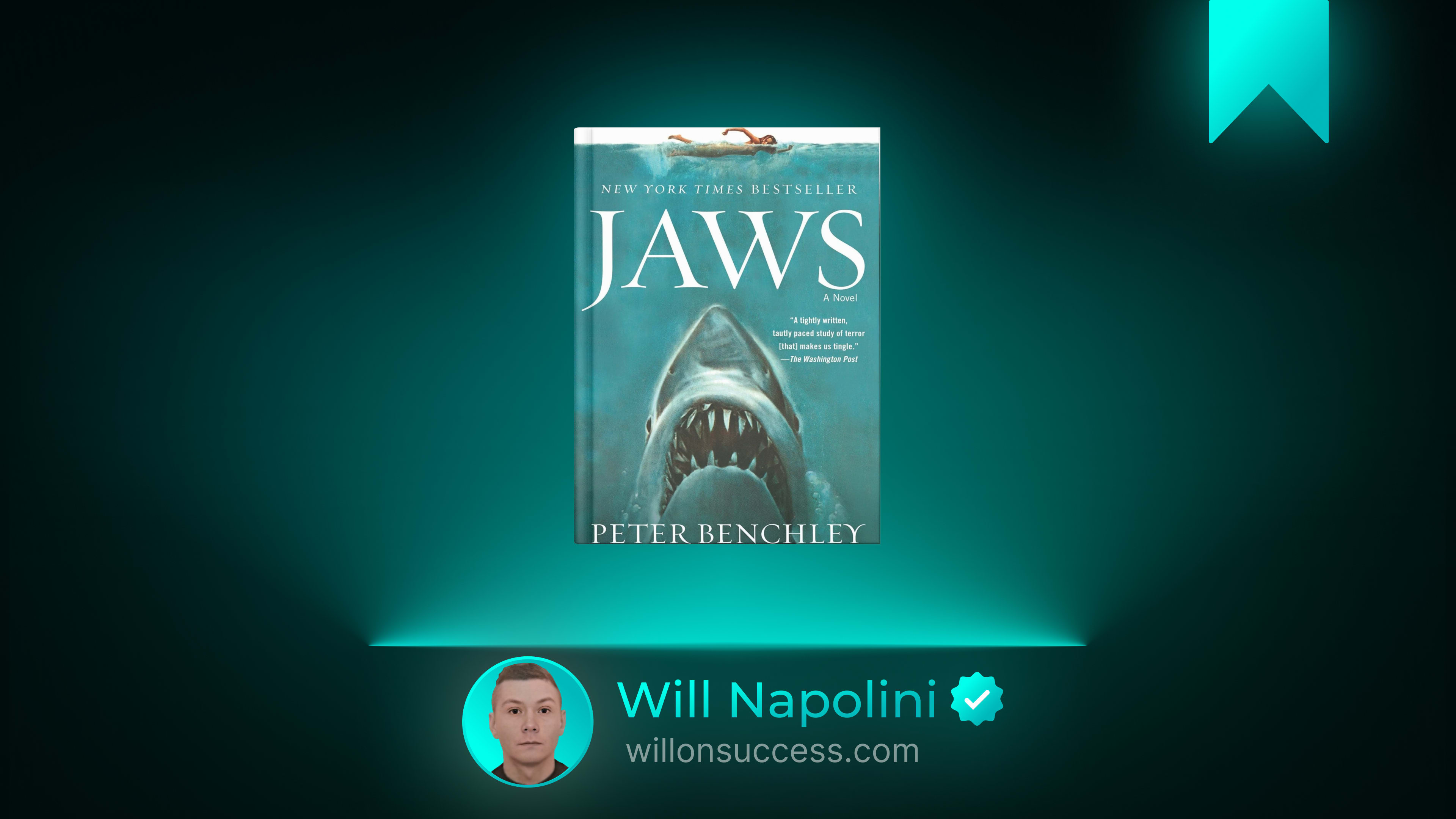
We love stories where good defeats evil, where heroes are pure and villains are monstrous. But what if the real danger isn’t the beast in the water? What if it’s the corruption in the town hall, the jealousy in your own heart, or the systems that profit from ignoring truth? Peter Benchley’s 1974 novel Jaws is often remembered as a shark story, but its true subject is human nature. Unlike the streamlined heroism of Spielberg’s film, the book presents a world where everyone is compromised, the shark is merely doing what sharks do, and survival demands confronting not just external threats but internal rot.
If you have ever felt disillusioned by institutions, betrayed by people you trusted, or haunted by your own unflattering impulses, this novel speaks to the part of you that knows growth begins in honesty, not fantasy. It reminds us that facing reality—even when it’s ugly—is the only path to genuine safety.
The Big Idea: Humans Are the True Predators
The central thesis of Benchley’s Jaws is that humanity’s exploitation of nature and each other creates conditions far more dangerous than any animal. The great white shark is not evil; it is an ancient, amoral force responding to ecological intrusion. Meanwhile, Mayor Vaughn colludes with the mafia to keep beaches open for profit, tourists flock to witness death out of morbid curiosity, and even the protagonists harbor deep flaws. The shark becomes a mirror reflecting human predation back at itself.
This matters because we still live in a culture that prefers simple villains to systemic accountability. We blame individuals while excusing structures. Benchley forces us to ask: Who is truly responsible when tragedy strikes? Character before circumstances means owning your role in broken systems. Responsibility before excuses means refusing to outsource morality to heroes or monsters.
Brody’s Jealousy: When Fear Masks Insecurity
Martin Brody in the novel is not the likable everyman of the film. He is sullen, suspicious, and consumed by jealousy over his wife Ellen’s affair with Matt Hooper. His rage toward Hooper isn’t just about infidelity; it’s rooted in class resentment and feelings of inadequacy. At one point, he physically attacks Hooper aboard the Orca—a moment stripped entirely from the movie.
Yet this ugliness serves a purpose. Brody’s jealousy reveals how fear distorts judgment. His obsession with controlling his wife mirrors the town’s obsession with controlling narrative. Only when he stops fighting ghosts and faces the actual shark does he regain agency. Growth requires distinguishing real threats from projected ones. On days when insecurity whispers that you’re failing, ask: Am I responding to what is, or to what I fear? Clarity comes not from suppressing emotion, but from examining its source.
Hooper’s Arrogance: Knowledge Without Wisdom Is Dangerous
Matt Hooper arrives as a wealthy ichthyologist whose scientific expertise masks condescension. He dismisses Quint as uneducated and Brody as provincial, believing intellect alone qualifies him to lead. But his detachment from lived experience makes him reckless—he uses illegal bait, underestimates the shark’s adaptability, and dies because he mistakes data for understanding.
Hooper represents the peril of expertise divorced from humility. In our age of information overload, we confuse knowing facts with possessing wisdom. Principles before hacks means recognizing that knowledge serves life, not ego. Action before intention means testing theories against reality, not forcing reality to fit theory. True competence includes listening to those who’ve survived what you’ve only studied.
Quint’s Obsession: Trauma Weaponized as Purpose
Quint is no noble captain. He disembowels sharks, uses unborn dolphins as bait, and hunts with fanatical hatred born of wartime trauma. His Ahab-like obsession isn’t heroic; it’s self-destruction wearing courage as costume. He sees the shark as personal enemy rather than ecological consequence, blinding him to collaboration until it’s too late.
Obsession feels like purpose but lacks sustainability. When pain drives mission without integration, burnout or harm follows. Healing requires transforming wounds into wisdom, not weapons. Ask: Does my drive serve life, or merely replay old battles? Resilience isn’t endless pursuit; it’s aligned action rooted in wholeness.
Vaughn’s Greed: Systems That Sacrifice Truth for Profit
Mayor Larry Vaughn embodies institutional corruption. In the novel, he’s tied to mafia investors who bought cheap property expecting tourism-driven profits. He falsifies death reports, pressures Brody, and prioritizes “summer dollars” over lives—not out of ignorance, but calculated greed. The public’s morbid fascination enables him; they glamorize danger while demanding safety.
Vaughn shows how systems incentivize denial. We still elect leaders who trade long-term well-being for short-term gain. Responsibility before excuses means questioning narratives that benefit powerful interests. Character before circumstances means speaking truth even when it costs you. Integrity isn’t passive virtue; it’s active resistance to normalized corruption.
Why This Matters Beyond Fiction
You may wonder why a 50-year-old novel about a shark matters today. Because the dynamics haven’t changed—they’ve evolved. Social media amplifies morbid curiosity. Algorithms reward outrage over accuracy. Leaders still sacrifice public good for private gain. And we still project our shadows onto convenient monsters while ignoring complicity.
On Tuesdays when cynicism creeps in, remember Benchley’s lesson: despair is lazy. Hope requires clear-eyed engagement with complexity. Consistency before intensity means daily choosing truth over comfort. Growth before achievement means valuing character over outcomes.
Practical Application: Audit Your Own Predatory Patterns
Understanding is valuable, but understanding without action changes nothing. Here is one concrete step inspired by Benchley’s unflinching honesty:
Conduct a Personal Predation Audit
Set aside thirty minutes. Reflect honestly: Where in my life am I acting from fear, greed, arrogance, or unresolved pain rather than integrity? Consider relationships, work, consumption habits, and civic participation. Write down three instances where your actions harmed others or yourself indirectly. For each, note the underlying driver (e.g., insecurity, status anxiety, avoidance). Then write one corrective action grounded in responsibility, not shame.
Do this quarterly. Notice patterns. Adjust course gently. Self-awareness is not self-flagellation; it’s stewardship.
Who Should Read This Book
Jaws will resonate deeply if you:
- Seek literature that challenges moral simplicity
- Feel disillusioned by institutional failures
- Want to understand systemic critiques through narrative
- Believe personal growth requires confronting uncomfortable truths
- Appreciate stories where redemption is earned, not given
It may be less useful if you seek escapist thrills, clear heroes/villains, or uplifting resolutions. Benchley offers neither comfort nor condemnation—only clarity. His voice is unsentimental but never nihilistic.
Read this book if you’re ready to stop hunting monsters and start healing the world that creates them.
One Small Step Toward Integrity
Before you close this page, identify one area where you’ve avoided truth to preserve comfort.
Name it aloud. Then commit to one honest conversation or boundary within 48 hours.
Do this now.
Because safety isn’t found in denying darkness. It’s forged in bringing light to it.
The real jaws aren’t in the ocean. They’re in the choices we refuse to face.