Choosing the Better Story: What Life of Pi Teaches About Truth and Survival
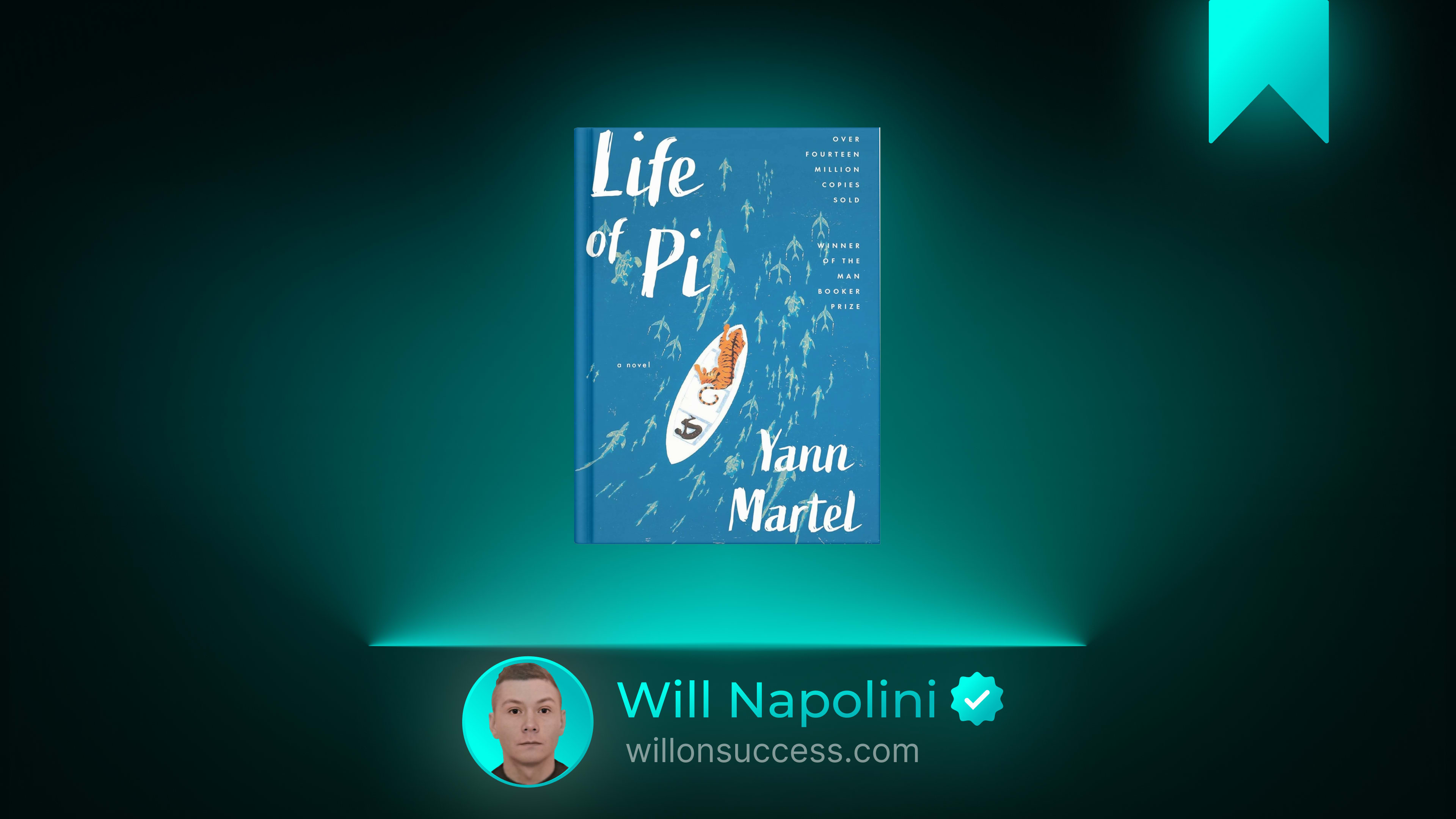
What if the truth you need most isn’t the one that can be proven, but the one that keeps you alive?
You may have faced a moment when facts offered no comfort—when loss, trauma, or uncertainty left you stranded in a sea of meaninglessness. In those moments, data doesn’t heal. Logic doesn’t hold you. What sustains us is often something less tangible but more vital: a story that makes endurance possible.
Yann Martel’s Life of Pi is not merely a novel about a boy surviving 227 days adrift in the Pacific with a Bengal tiger. It is a meditation on how human beings construct meaning when reality becomes unbearable. At its heart, the book asks a deceptively simple question: When two stories explain the same events, which do you choose—and why does that choice define who you become?
The central idea is this: Truth is not only factual accuracy; it is also functional meaning. We survive not by denying harsh realities, but by weaving them into narratives that preserve our humanity. Faith, in Martel’s vision, is not belief in spite of evidence, but the courageous act of choosing a story that enlarges rather than diminishes the soul.
This matters because you are already living inside a story. The question is whether it empowers you or imprisons you.
The Two Stories and the Choice Between Them
Near the end of the novel, after recounting his extraordinary ordeal with the tiger Richard Parker, Pi tells Japanese insurance investigators a second version of his survival—one without animals, only humans reduced to brutality. Both stories account for the same wreckage, the same deaths, the same rescue. Neither can be verified.
When asked which they prefer, the investigators choose the first—the story with the tiger. Pi responds, “And so it goes with God.”
I have sat with people in hospital rooms and funeral homes who faced this exact dilemma. Not about tigers or lifeboats, but about how to narrate their own pain. One woman told me her divorce was “just bad luck.” Another described it as “the painful birth of a truer self.” Both were factually accurate. Only one allowed her to move forward with dignity.
Martel does not dismiss the darker story. He acknowledges its plausibility. But he insists that the better story is not necessarily the truer in a forensic sense—it is the one that honors the complexity of being human while refusing to surrender to despair.
Your interpretation of suffering shapes your capacity to transcend it. Choose wisely.
Faith as an Act of Imagination, Not Denial
Pi practices Hinduism, Christianity, and Islam simultaneously—not out of confusion, but out of conviction that each tradition offers a different lens on the divine. His faith is not doctrinal purity; it is existential hospitality.
Many readers mistake this syncretism for relativism. But Pi’s pluralism is rooted in devotion, not indifference. He loves God too much to confine the sacred to a single container. For him, religion is not a set of propositions to defend, but a language of wonder to inhabit.
I have learned that faith, at its best, functions like Richard Parker himself: terrifying, necessary, and inseparable from survival. Without the tiger, Pi admits, he would have perished from loneliness and despair. The tiger forced vigilance, routine, purpose. Faith operates similarly. It does not remove danger; it gives you a reason to stay alert within it.
You do not need to believe in God to understand this. You only need to recognize that some form of sustaining narrative—whether spiritual, artistic, or relational—is essential to psychological survival. The alternative is not neutrality; it is nihilism dressed as objectivity.
What story are you feeding your inner tiger today?
Ritual as Anchor in Chaos
Adrift on the ocean, Pi establishes meticulous routines: feeding the tiger, cleaning the raft, praying at fixed times, journaling observations. These rituals are not superstitious gestures. They are lifelines against madness.
In extreme deprivation, structure becomes salvation. The mind cannot endure pure randomness. Ritual imposes order on chaos, creating pockets of predictability where agency can persist. Pi’s prayers are less about petitioning heaven than about preserving his identity as someone who still belongs to a world with rhythm and meaning.
I have seen this principle operate far beyond shipwrecks. Grieving parents who cook their child’s favorite meal every Sunday. Veterans who walk the same route each morning. Recovering addicts who attend meetings regardless of feeling. These are not empty repetitions. They are declarations: I am still here. I still matter. Time still moves.
You may be navigating your own storm right now. If so, do not wait for calm to create structure. Create structure to survive until calm arrives.
Start small. Make your bed. Say a word of gratitude. Light a candle. These are not trivial acts. They are resistance against the void.
The Tiger Within: Integrating Shadow and Survival
Richard Parker is not merely a threat; he is Pi’s shadow made flesh. The tiger represents everything Pi must acknowledge but cannot afford to indulge: rage, hunger, fear, the will to dominate. Yet without integrating this ferocity, Pi would have been consumed by passivity or sentimentality.
True resilience requires both compassion and steel. Pi learns to respect the tiger without romanticizing it, to manage it without pretending it isn’t dangerous. This balance mirrors the inner work we all face: acknowledging our darkness without letting it steer the boat.
I have mentored people who believed strength meant suppressing vulnerability, and others who mistook gentleness for weakness. Both extremes sink the raft. Wholeness comes from holding tension—not resolving it prematurely.
Ask yourself honestly: What part of yourself have you exiled because it feels too wild, too angry, too inconvenient? That part may be the very thing keeping you alive. Integration, not elimination, is the path home.
Why This Book Matters Beyond Allegory
Life of Pi is often read as religious allegory or postmodern fable. But its deepest gift is practical wisdom for ordinary suffering.
You do not need to be shipwrecked to feel lost. You do not need a tiger to confront your shadows. Every day presents micro-shipwrecks: failed relationships, career collapses, health crises, quiet disillusionments. In each, you face the same choice Pi did: Will you tell a story that shrinks you, or one that expands you?
Martel refuses to offer easy answers. He shows us a boy who survives through imagination, discipline, and stubborn love—but who also bears permanent scars. Meaning-making is not a cure for pain; it is a way of carrying pain without being crushed by it.
This book is for anyone who has ever whispered, “There must be more to this than what I see.” It is for the doubter who longs to believe, and the believer who fears their faith is fragile. Most of all, it is for you, reading this now, wondering if your story still matters.
It does. Especially the parts that hurt.
Who Should Read This Book (And Who Might Struggle)
Life of Pi will resonate deeply with:
- Seekers wrestling with doubt or spiritual ambiguity
- Survivors of trauma searching for language beyond victimhood
- Writers and artists exploring the ethics of storytelling
- Anyone facing a crisis of meaning in work, relationships, or identity
- Readers comfortable with ambiguity and symbolic thinking
It may frustrate:
- Those seeking literal adventure or zoological realism
- Readers who demand clear moral binaries or doctrinal conclusions
- People currently in acute trauma who may find the violence triggering (approach with care)
- Skeptics unwilling to engage metaphor as valid knowledge
Read it slowly. Let it unsettle you. Return to passages that confuse or move you. The book rewards rereading because you bring different questions each time.
One Small Step You Can Take Today
You do not need to rewrite your entire life story tonight. You only need to notice which story you’re currently telling yourself about your present struggle.
Write down two versions of your current challenge.
Version A: The bare-bones factual account. What happened. Who was involved. What was lost.
Version B: The same events framed through a lens of growth, connection, or purpose. Not denial. Not toxic positivity. Just a different emphasis.
Then ask: Which version allows me to breathe? Which one leaves room for hope without lying?
Keep Version B nearby. Revisit it when despair whispers that nothing matters.
You are not obligated to believe the better story forever. You are only invited to try it on, like a life jacket, to see if it holds you.
The story you choose doesn’t change the past—but it builds the vessel that carries you toward whatever comes next.