The Song That Never Ends: What Love You Forever Teaches About the Constancy of Love
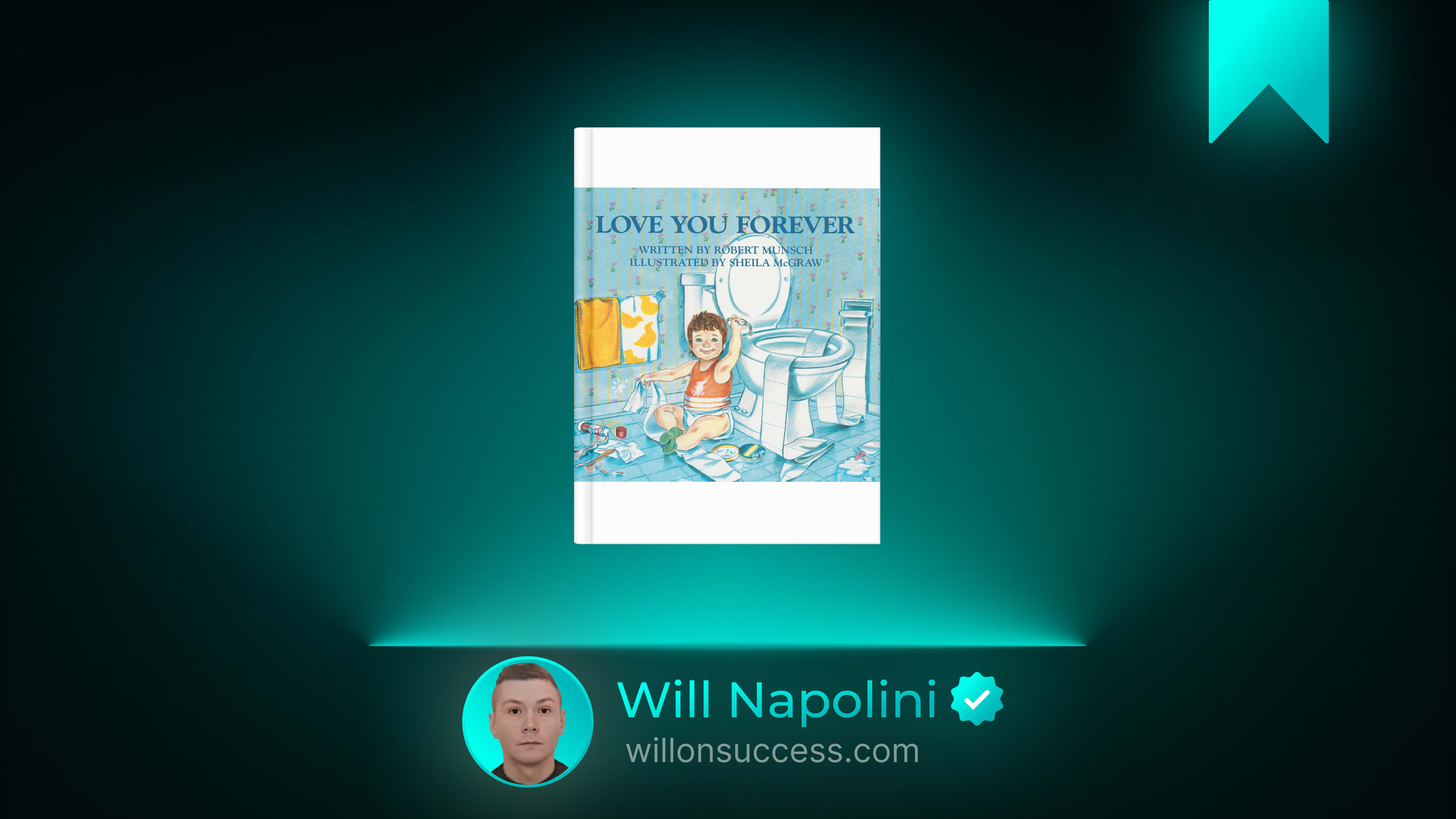
I need to warn you about this book.
It is thirty-two pages long. The language is so simple a four-year-old can follow it. The illustrations are soft and unassuming. It looks, on every outward measure, like an ordinary bedtime story. And then you reach the final page, and something in your chest cracks open, and you are sitting in a chair holding a picture book, weeping like a child, wondering where the last twenty years went.
I have seen this happen to people who do not cry at movies. People who do not cry at funerals. People who have built their lives around composure and control. Robert Munsch’s Love You Forever, published in 1986, slips past every adult defense mechanism and walks directly into the oldest, most vulnerable room in your heart—the room where you were small, and someone held you, and the world was only as large as the circle of their arms.
The book is about a mother and her son. It is about a song. And it is about the terrifying, beautiful, unbearable fact that love does not diminish with time, even as everything else changes. Even as the baby becomes a terrible two-year-old. Even as the child becomes a sullen teenager. Even as the teenager becomes a man with his own home, his own life, his own distance. Even as the mother becomes old, and frail, and unable to sing.
The central idea is this: Love is not a phase. It is not something you grow out of, or grow past, or outgrow the need for. It is the single thread that runs through every stage of a life, changing its shape but never its substance. And when the thread is passed forward—when the son becomes the father, when the caregiver becomes the cared-for—the song does not end. It simply finds a new voice.
The Song and Its Hidden Origin
The song at the center of the book is deceptively simple. A mother holds her baby and sings:
“I’ll love you forever, I’ll like you for always, As long as I’m living, my baby you’ll be.”
She sings it when he is a newborn. She sings it when he is two and smashing food on the wall. She sings it when he is nine and making a mess of the house. She sneaks into his room at night, when he is a teenager blasting terrible music, and she holds him and sings it. She drives across town with a ladder, climbs through the window of his adult home, rocks him in a chair, and sings it.
And then, at the end, when she is old and sick and tells him she cannot sing it anymore, he picks her up. He holds her. And he sings it back:
“I’ll love you forever, I’ll like you for always, As long as I’m living, my mother you’ll be.”
Then he goes home. He stands in the doorway of his daughter’s room. He picks up his newborn. And he sings it to her.
The cycle begins again.
What many readers do not know—and what gives the book its hidden depth—is where Munsch found this story. Before Love You Forever was written, Munsch and his wife experienced the loss of two stillborn children. The grief of that loss, the fierce and unbearable love for children who never drew breath, lived in him for years. The book emerged not from sentimentality, but from the deepest wound a parent can carry. The song is not merely sweet. It is a declaration made in the face of loss. It says: Even if I never get to hold you long, even if time is shorter than I can bear, the love does not end. I will carry you. I will sing to you. Forever.
This context changes how you read the book. The mother’s persistence is not just devotion. It is defiance. It is a refusal to let time, or distance, or difficulty, or death have the final word.
Loving Through the Phases You Did Not Choose
One of the quiet truths in this book is that the mother does not only sing when the child is lovable. She sings when he is two and terrible. When he is nine and destructive. When he is a teenager and the music is awful and the door is closed and the distance is growing.
She does not wait for him to earn the song. She does not say, “I will hold you and sing to you when you are behaving in a way that makes it easy.” She sings in the middle of the mess. In the middle of the difficulty. In the middle of the phase that makes her want to pull her hair out.
I have learned, through years of watching people navigate their most important relationships, that this is the hardest form of love. It is easy to love someone when they are a newborn, soft and warm and entirely dependent. It is easy to love someone when they are succeeding, when they are kind, when they make you proud. The test of love—the true test—is whether you can remain present, remain tender, remain connected, when the person you love is in their most difficult season. When they are pushing you away. When they are loud, or sullen, or cruel, or lost. When the relationship feels one-sided and thankless.
The mother in this book climbs through the window. She brings a ladder. She does not knock and wait for permission. She does not say, “I’ll come back when he’s ready.” She shows up. She holds him. She sings.
This is not about ignoring boundaries or smothering independence. The book is gentle, not intrusive. But it is about a love that does not wait for perfect conditions. A love that says, I will come to you in the mess. I will not require you to clean yourself up before you are worthy of being held.
The people in your life do not need your love most when they are easy to love. They need it most when they are not.
The Reversal: Becoming the Arms That Hold
The most devastating turn in the book is the quietest one. The mother grows old. She grows sick. She tells her son, simply, that she cannot sing the song anymore.
And he picks her up.
This moment is the hinge of the entire story. The arms that held are now held. The voice that sang now listens. The one who climbed through windows with a ladder now receives the visit. The one who carried the weight now becomes the weight.
If you are in the middle of your life right now—building a career, raising children, managing a household—this reversal may still feel distant. Abstract. But it is coming. For most of us, there will be a season when the people who once carried us cannot carry themselves. When the phone calls change. When the hospital visits begin. When you realize, with a sudden and terrible clarity, that the person who once seemed invincible is fragile, and that the responsibility has shifted to your shoulders.
This is not a burden. Or rather, it is a burden, but it is also a privilege. It is the completion of a circle. It is your chance to say, with your hands and your presence and your patience: You held me when I could not hold myself. Now I will hold you.
The son does not hire someone else to sing the song. He does not send a card. He picks her up. He holds her. He sings. He does it himself, because the song was never about the words. It was about the arms. It was about the body that says, You are not alone. You are not forgotten. You are still my mother. You are still my baby.
The Transmission: How Love Passes Forward
The final image of the book is the son standing in the doorway of his daughter’s room. He picks up his newborn. He sings the song.
He does not compose a new song. He does not reinvent the ritual. He passes forward what was given to him. The same words. The same melody. The same act of holding.
This is how love survives death. This is how it outlasts any single life. It is transmitted. Not through grand inheritance or material wealth, but through the simple, repeated, physical act of showing up and saying, You matter. You are held. You are mine, and I am yours, and this does not end.
You may not have children. You may not have a relationship with your parents that resembles the one in this book. That is okay. The principle is not limited to biological parenthood. The principle is this: What is given to you in love, you can give forward. The song does not have to come from your mother. It can come from a teacher, a friend, a mentor, a neighbor, a stranger who saw you when you were invisible. And you can sing it to someone who needs to hear it now.
The chain of love is not a bloodline. It is a choice, repeated.
Who Should Read This Book
I will be honest: this is a children’s picture book. The illustrations are simple. The vocabulary is minimal. A four-year-old can follow the plot.
But this book is not really for four-year-olds. It is for the adults who read it aloud and find themselves unable to finish the last page without pausing to breathe.
This book will move you deeply if you:
- Are a parent, or were once a child, or both (which is to say, if you are a person)
- Are in a season of caring for aging parents and need to feel that the weight you carry is also a gift
- Have lost a parent and need permission to grieve them, even years later
- Are a parent in the middle of a difficult phase—the terrible twos, the sullen teenager—and need to be reminded that the season will pass but the love will remain
- Have experienced the loss of a child, or the fear of losing one, and need to know that your love is not contingent on time
A gentle word of caution: If your relationship with your parents was marked by harm, absence, or cruelty, this book may open wounds rather than soothe them. The image of the devoted, singing mother may feel like a reminder of what you did not receive. If that is you, I want you to know: the song still belongs to you. You can sing it to yourself. You can sing it to the people you have chosen. You are not obligated to grieve a love you were never given. You are only invited to recognize the love you can still create.
One Small Step You Can Take Today
You do not need to climb through a window with a ladder. You do not need to compose a lullaby. You only need to close one small distance.
Identify one person who helped shape who you are—a parent, a grandparent, a teacher, a mentor, a friend who was there when you were small in some way.
And then, before the day ends, reach out to them. Not with a grand gesture. Not with a speech. Just a small act of presence. A phone call. A text that says, “I was thinking about you today, and I wanted you to know that what you gave me mattered.” A visit. A hand on the shoulder. A moment where you look at them and let them see that you see them.
If that person is no longer living, say the words aloud. Say them to the air. Say them to the memory. The song does not require a listener to be real. It only requires a singer willing to let the love exist, even when the arms that first held it are gone.
And if you are holding someone small right now—a child, a niece, a nephew, a friend in a dark season—hold them a little longer tonight. You do not need to sing. You do not need to perform. You only need to be the arms. You only need to be the voice that says, quietly, in the dark: You are not alone. I am here. This does not end.
The song is not a promise that time will stand still. It is a promise that love will outlast it. And the only way to keep the song alive is to sing it, today, to whoever is close enough to hear.