Mockingjay by Suzanne Collins: The Hardest Victory Is Refusing to Become the Enemy
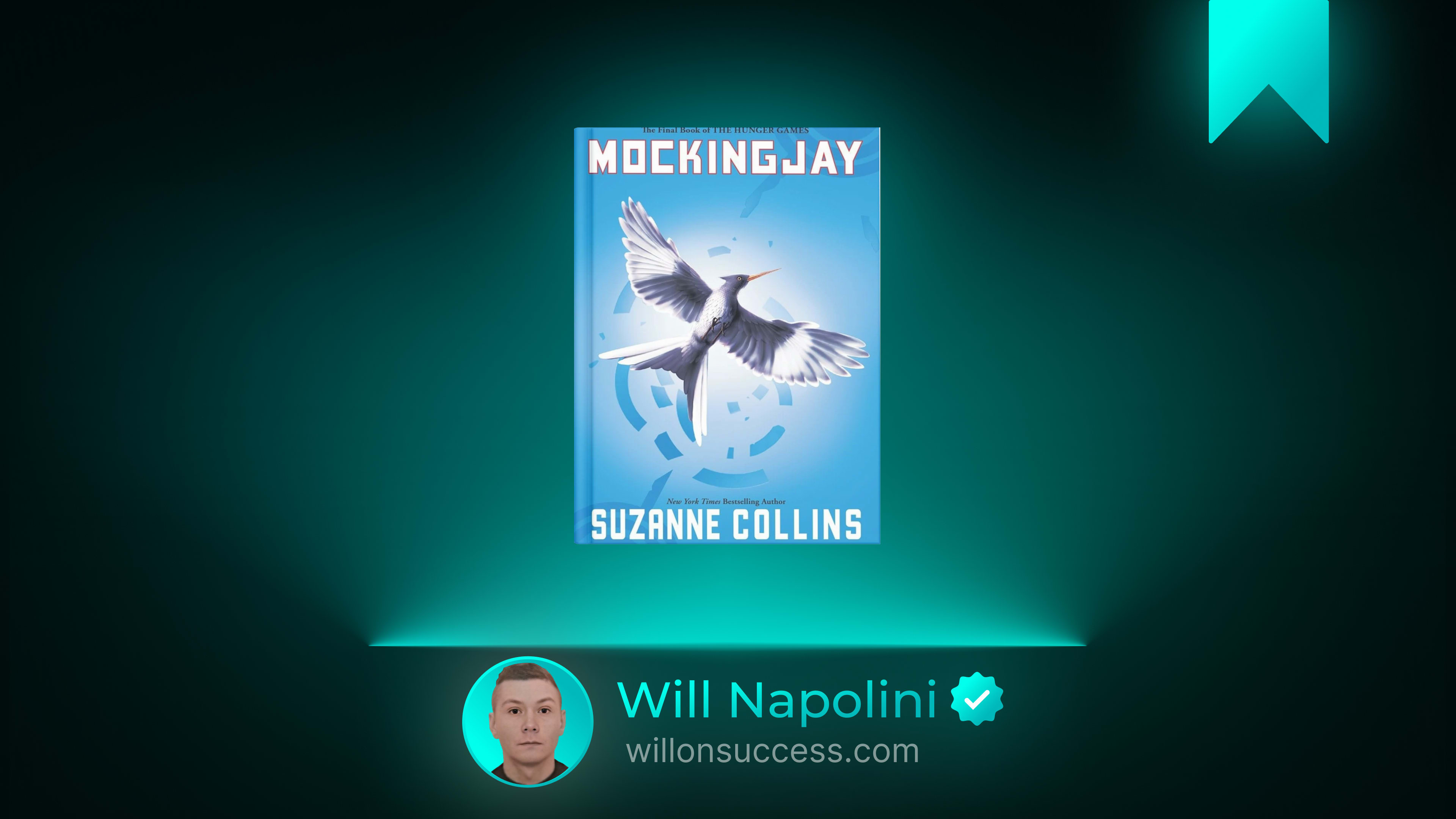
There is a question that haunts the end of every revolution, a question that most stories about overthrowing tyrants never bother to ask: What happens to the person holding the weapon after the war is won?
Most narratives give you the triumphant finale. The crowd cheers. The flag rises. The hero stands in the sunlight, whole and vindicated. Then the story ends, because the ending is the point.
Suzanne Collins does not give you that ending. In Mockingjay, the final book of The Hunger Games trilogy, she gives you something far more honest and far more difficult. She gives you the aftermath. She gives you the cost. She gives you a seventeen-year-old girl who has survived impossible things, only to discover that survival has not made her whole—it has made her a tool, a symbol, a weapon pointed by people who care very little about the girl inside the armor.
If you have ever fought hard for something, only to look up and realize the fight has changed you in ways you did not intend, this book is speaking directly to you. If you have ever wondered whether it is possible to stand against injustice without being consumed by it, Collins has written an answer. It is not a comfortable answer. But it is a true one.
The Big Idea
The central thesis of Mockingjay is deceptively simple and profoundly unsettling: the most dangerous enemy is not the one who oppresses you. It is the one who promises to free you while quietly becoming the same thing.
Collins is not writing a simple story of good rebels versus evil empire. She is writing about the architecture of power itself—how it operates, how it disguises itself, and how it survives the destruction of one tyrant by simply putting on a new face. The Capitol under President Snow is monstrous. But District 13, the rebellion’s stronghold, is not innocent. It is rigid, manipulative, and willing to sacrifice individuals for the collective cause. Both systems use people. Both systems demand obedience. Both systems decide who is expendable.
The genius of Collins’ vision is that she forces her protagonist—and her reader—to confront the possibility that winning the war does not mean defeating the thing you were fighting against. Sometimes, the revolution merely rotates the machinery of control. The uniforms change. The speeches change. The hunger remains.
And the only true rebellion, Collins argues, is the refusal to let that machinery operate through you.
The Story
At the beginning of Mockingjay, Katniss Everdeen has been pulled from the arena of the Quarter Quell by a covert rescue operation. She arrives in District 13—a district she believed had been annihilated decades ago, but which has survived underground, militarized and austere. Above ground, her home, District 12, has been firebombed into ash by the Capitol as punishment for her defiance.
The rebellion needs a face. They need a symbol. And they have chosen Katniss.
She becomes the Mockingjay—the living emblem of the uprising. She is dressed in a costume, placed before cameras, and directed to deliver lines written by a propaganda team. She is asked to be brave, to be inspiring, to be the thing that makes millions of frightened people willing to die. What she is not asked is whether she wants this. What she is not permitted is to grieve.
Meanwhile, Peeta Mellark—the boy who once saved her life with a loaf of bread—has been captured by the Capitol. Through a process called hijacking, his memories have been chemically altered using tracker jacker venom. He has been turned against Katniss. He no longer remembers her with love. He remembers her with hatred. The person she fought to protect has been made into a weapon aimed directly at her heart.
As the war escalates, Katniss moves from propaganda tool to active combatant, infiltrating the Capitol with a squad of soldiers. The streets are rigged with deadly traps. Children are used as human shields. Allies die in sudden, senseless bursts of violence. The line between military operation and atrocity blurs until it vanishes.
And then comes the moment that defines the entire book. In the final confrontation, with the war essentially won, Katniss is given the chance to execute President Snow. She draws back her bow. She aims. And she makes a different choice.
She shoots the person who will simply become the next Snow.
The Symbol Swallows the Person
One of the most painful truths Collins explores is what happens when a human being is reduced to a symbol.
A symbol cannot grieve. A symbol cannot hesitate. A symbol cannot say, I am terrified and I want to go home. A symbol must be strong, must be certain, must be whatever the cause requires it to be. And slowly, the person underneath the symbol begins to disappear.
I have seen this happen in smaller ways in ordinary life. The entrepreneur who becomes the “visionary” and is no longer allowed to be uncertain. The parent who becomes the “strong one” and is never permitted to break down. The employee who becomes the “reliable one” and quietly drowns under the weight of everyone else’s expectations.
Katniss fights this erasure throughout the book. She resists the script. She says the wrong things on camera. She demands autonomy in exchange for her compliance. But the machinery of the rebellion is patient. It does not need her to be willing. It only needs her to be visible.
The question Collins poses is one every leader, every creator, every person in a visible role must eventually answer: Can I serve a cause without being consumed by it? Can I be useful without becoming disposable?
There is no easy answer. But Collins suggests that the beginning of an answer lies in refusing to let anyone else write your story. The mockingbird, after all, does not sing its own song. It repeats what others sing. The tragedy of Katniss Everdeen is that everyone around her wants her to sing their song. Her ultimate act of courage is finding her own voice, even if that voice says no.
The Thin Line Between Justice and Revenge
There is a scene late in the book that I have carried with me for years. The war is ending. The rebels are discussing what to do with the children of the Capitol. One faction proposes a final, symbolic act of cruelty: new Hunger Games, this time with Capitol children.
Katniss is asked to vote.
She votes yes.
This moment is devastating because it is not a mistake. It is not a misunderstanding. Katniss votes yes because she understands that this vote is the price of getting close enough to the one person she actually needs to stop. She is willing to carry the moral weight of that choice because the alternative is another cycle of the same violence, wearing a different flag.
Collins is asking something brutal of her reader here. She is asking: How do you build a just world when the tools available to you were forged in injustice? How do you dismantle a system of cruelty when the only power you have was built through cruelty?
I have learned that moral courage is rarely dramatic. It is rarely clean. Sometimes it looks like making an ugly compromise in public so that you can make the right choice in private. Sometimes it looks like letting people misunderstand you, because explaining yourself would compromise the thing that actually matters.
The line between justice and revenge is not a wall. It is a thread. And the only thing that keeps you on the right side of that thread is your willingness to examine your own motives with ruthless honesty. The moment you believe you are too righteous to question, you have already crossed.
The Cost Is Never Abstract
Collins refuses to let war be clean. She refuses to let the reader experience the rebellion as a tidy narrative of heroes and villains.
People die in this book. Not heroically. Not meaningfully. They die mid-sentence. They die because a trap was hidden under a doorstep. They die because a bomb was designed to look like a medical supply, drawing medics and children toward it before detonating a second time. They die in ways that are ugly, sudden, and deeply unfair.
And the ones who survive do not walk away whole.
Katniss does not ride off into the sunset. She attempts to take her own life. She is institutionalized. She cannot speak for a time. She flinches at sounds. She cannot trust her own memories. The war is over, and she is not free. She is haunted.
I think this is one of the most important things Collins accomplishes in Mockingjay. In a culture that often treats resilience as bouncing back, as returning to baseline, as proving that the hardship “made you stronger,” Collins says something different. She says: You will not bounce back. You will be changed. And the goal is not to pretend you are unchanged. The goal is to find a way to live inside the change.
Healing is not a triumphant return to the person you were before. It is the slow, quiet work of building a new life on burned ground. It is planting a garden in soil that still smells like ash, and trusting that something might grow.
Why It Matters
You may be thinking: This is a young adult dystopian novel. What does it have to do with my life?
More than you might expect.
The machinery of propaganda that Collins describes—the way both the Capitol and District 13 manufacture narratives, edit footage, and use human beings as emotional levers to control populations—is not so different from the information environment we navigate every day. The pressure to pick a side, to perform certainty, to reduce complex human beings into symbols of good or evil, is not confined to fictional dystopias. You feel it every time you open a screen.
The question of whether a leader who overthrows a tyrant will simply become the next tyrant is not hypothetical. It plays out in boardrooms, in political movements, in families, in every institution where power changes hands. The person who says, I am different from the one I replaced, is not automatically telling the truth. Sometimes they are. But the structure of power does not care about your intentions. It cares about your compliance.
And the personal dimension—the cost of carrying a role larger than yourself, the slow erosion of identity when you become what others need you to be—is something I have seen in nearly every high-achieving person I have ever mentored. The executive who cannot stop performing confidence. The caregiver who has forgotten how to want things for herself. The young professional who built a persona so convincing that he no longer knows which parts are real.
Mockingjay is a mirror. It asks you to look at the structures you serve and ask whether they serve you back. It asks you to examine the roles you have accepted and consider whether they are expanding you or erasing you.
Practical Application
Collins is not writing a how-to manual. But the moral architecture of her story offers questions worth sitting with. I am not going to give you a five-step system for “applying Mockingjay to your life.” That would be a disservice to the book’s complexity. Instead, I want to offer you a set of honest questions. Write them down. Let them sit with you for a few days. See what rises.
On symbols and identity: Where in your life have you become a symbol instead of a person? Where are you performing a role—reliable, strong, visionary, agreeable—so consistently that you have lost touch with what you actually feel? What would it cost you to set that role down for one afternoon?
On the architecture of power: Think about the last time you were asked to support a cause, a team, a movement, or a leader. Did you examine the structure, or did you accept the narrative? What mechanisms exist to hold that power accountable? If there are none, what does that tell you?
On cycles: What pattern in your life are you repeating that you swore you would never repeat? The anger that mirrors a parent’s anger. The silence that echoes a partner’s silence. The perfectionism that looks identical to the pressure you once resented. You cannot break a cycle by running from it. You break it by seeing it clearly and choosing a different response, even when every instinct says to react the old way.
On healing: If you are carrying something heavy—a loss, a failure, a period of your life you wish you could edit out—give yourself permission to grieve it without narrating it as a lesson. Not every wound is a gift. Some wounds are just wounds. And you are allowed to heal slowly, imperfectly, without performing gratitude for the thing that hurt you.
Who Should Read This Book
Mockingjay is not an easy book, and I want to be honest about that. It is the darkest of the three Hunger Games novels. It deals with psychological torture, child soldiers, propaganda, grief, and the long, ugly aftermath of violence. It does not offer the clean catharsis of the first book or the propulsive momentum of the second. It is slower, more fragmented, more psychologically complex.
If you are looking for a triumphant, feel-good finale, this will disappoint you. If you are in a fragile place emotionally and need stories that affirm safety and resolution, you may want to wait.
But if you are ready to sit with moral ambiguity, if you want a story that respects your intelligence and refuses to flatter you, if you have ever felt the weight of being needed in a way that slowly erases who you are—this book will find you. It will make you uncomfortable. And then, in its final pages, it will offer you something small and fragile and utterly earned: the possibility of planting something in the ruins.
One Small Step
Here is what I would ask you to do today.
Think of one role you play that has begun to feel like a costume. Maybe it is the version of yourself you perform at work. Maybe it is the version you perform for your family. Maybe it is the version you perform for yourself, in the quiet, when you tell yourself you are fine, you are handling it, you do not need help.
Write that role down. Name it. Give it the honesty it deserves.
Then write one sentence underneath it: The thing I actually feel right now is…
Do not edit it. Do not make it brave or productive or inspiring. Just write the truth of what is there.
That small act—the refusal to let the symbol swallow the person—is where your own quiet rebellion begins.
You do not need to overthrow an empire to practice moral courage. You need only refuse to let the world write your ending for you. The garden grows in the burned soil not because the fire was good, but because someone decided to plant a seed anyway. Plant your seed. The ground is ready.