Put Down the Phone and Trust Yourself: The Timeless Antidote to Parenting Anxiety
It is 2:00 a.m. The house is entirely quiet except for the hum of the refrigerator and the soft, frantic breathing of the baby in your arms. You are exhausted in a way that sleep no longer fixes. The baby is fussing, not quite crying, but unsettled.
And what do you do? If you are like most modern parents, you reach for your phone. You open an app to check if it has been exactly two hours since the last feed. You search a forum to see if this specific pitch of whimpering means teething, a sleep regression, or a developmental leap. You read three conflicting articles from three different “experts” on whether you should rock them, pat them, or put them down to self-soothe.
By 2:15 a.m., you are not just tired. You are paralyzed by the sheer volume of advice, terrified that one wrong move will permanently wire your child’s brain for anxiety or ruin their sleep architecture forever.
If I could sit across the table from you right now, with a cup of coffee in hand, I would tell you to put the phone face down on the table. I would tell you that the exhaustion you feel is real, but the panic is a manufactured byproduct of a culture that treats child-rearing like a high-stakes optimization project.
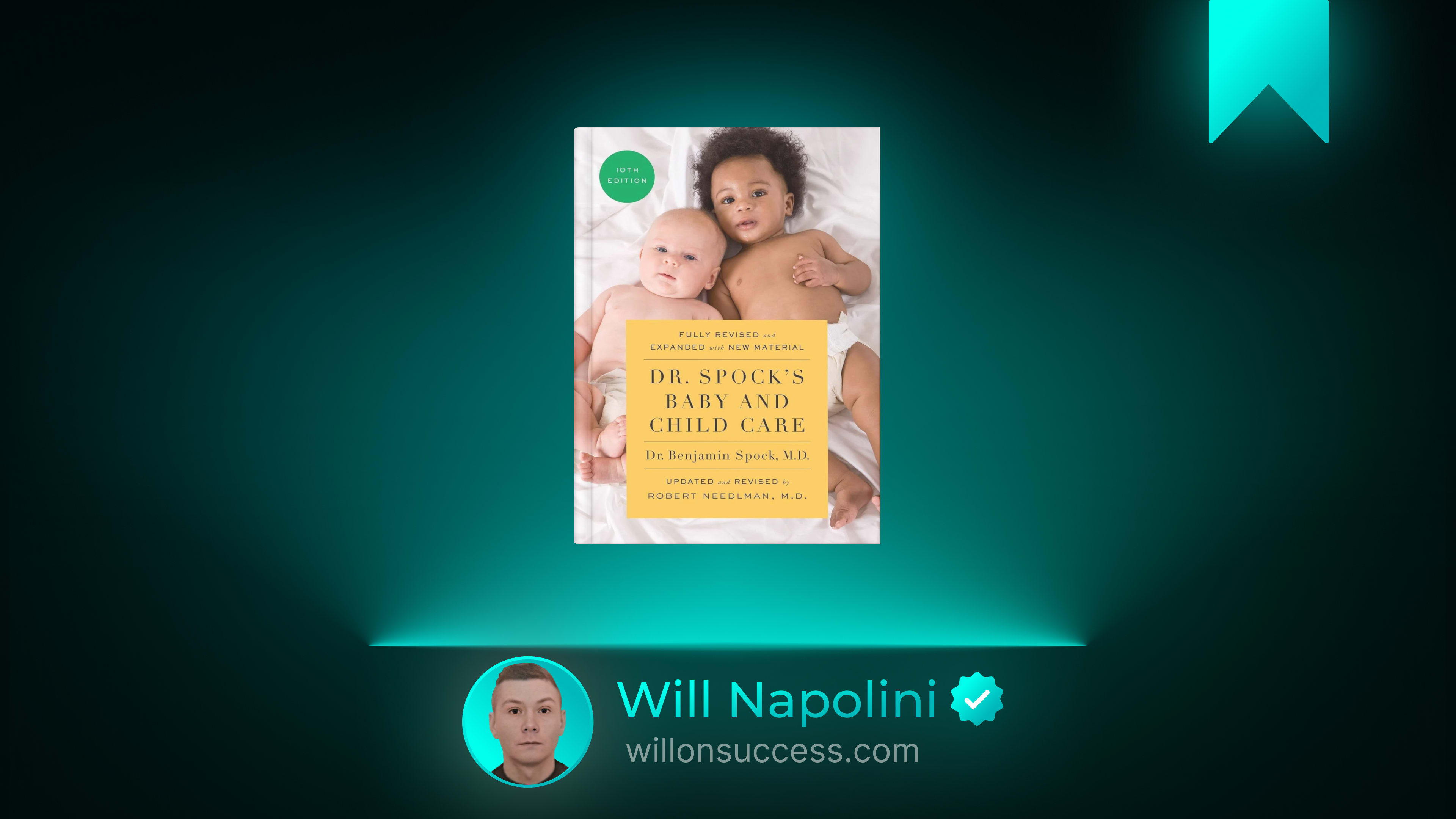
You do not need another algorithm. You need to remember the opening sentence of the most influential parenting book of the twentieth century.
Dr. Benjamin Spock began his monumental work, Baby and Child Care, with seven words that changed the way the world raised its children:
“Trust yourself. You know more than you think you do.”
Let’s talk about what that actually means, why we have forgotten it, and how reclaiming it might just save your sanity.
The Big Idea: Parenting Is a Relationship, Not a Protocol
First published in 1946 as The Common Sense Book of Baby and Child Care, Dr. Spock’s manual was a cultural earthquake. To understand why, you have to understand the world he was writing into.
Before Spock, the dominant voice in child psychology belonged to behaviorists like John B. Watson, who advised parents to treat children like small machines. The prevailing wisdom was rigid: feed the baby on a strict clock schedule, do not pick them up when they cry lest you “spoil” them, and avoid kissing them or holding them on your lap, because too much affection would render them weak and dependent. Parenting was an exercise in emotional distance and mechanical precision.
Spock, a pediatrician who had watched generations of families, looked at this cold, clinical approach and essentially said: No. These are human beings. Pick them up. Love them. Be flexible.
The central thesis of his book is profoundly simple but radically counter-cultural, even today: Good parenting does not come from perfectly executing a stranger’s system. It comes from a parent who is confident, affectionate, and willing to trust their own natural instincts. Spock argued that the parent-child bond is not a fragile mechanism that will shatter if you deviate from a schedule. It is a resilient, living relationship that thrives on warmth, common sense, and adaptability.
The Myth of Spoiling: Why Affection Is the Foundation
One of the most enduring anxieties parents carry is the fear of “spoiling” their child. We worry that if we respond too quickly to a cry, if we hold them too much, if we comfort them too readily, we will create a needy, entitled, or dependent human being.
Spock dismantled this fear with a clarity that still feels refreshing. He pointed out a fundamental truth about human infants: a baby’s cry is not a manipulation. It is a communication.
When a baby cries, they are saying, I am hungry, I am cold, I am overwhelmed, I am alone, and I do not have the neurological hardware to regulate my own nervous system yet. Responding to that cry with warmth and physical contact does not teach the baby that they are the center of the universe. It teaches them that the universe is a safe place, and that their needs will be met.
What I have learned from watching families over the years is that you cannot spoil a child with too much genuine love, but you can starve them with too much schedule.
The children who grow up to be demanding, entitled, and difficult are rarely the ones who were held too much as infants. They are usually the ones who, as they grew older, were given material things in place of boundaries, or were allowed to dictate the family’s emotional climate because the parents were afraid of causing a fuss. Spock was a champion of deep, unreserved affection in the early years, but he was equally clear that as children grow, they need parents who are confidently in charge. Love and firm, respectful boundaries are not opposites; they are the two walls that hold the house up.
Rhythms Over Rigid Schedules
If there is a secondary villain in Spock’s philosophy, it is the tyranny of the clock.
The behaviorists believed the baby’s body should be forced to conform to the adult’s schedule. Spock observed that babies are not factories; they are biological organisms. He advocated for what we might now call “responsive feeding” and “cue-based care.” He encouraged parents to watch the child, not the clock.
If the baby is hungry an hour early, feed them. If they are sleeping peacefully and it is time for a feed, let them sleep a little longer. He introduced the concept of rhythms rather than schedules. A rhythm is a natural flow that accommodates the reality of the day; a schedule is a rigid grid that breaks the moment reality interferes.
This principle extends far beyond infancy. As your child grows into a toddler, a school-ager, and a teenager, the temptation to micromanage their time, their hobbies, and their milestones only increases. We pack their afternoons with enrichment activities, track their reading minutes, and monitor their screen time down to the second.
But a child’s development is not a project management chart. It is a garden. You can prepare the soil, you can provide the water, and you can pull the weeds. But you cannot reach into the dirt and pull the stem upward to make it grow faster. You have to trust the rhythm of the season. When you relax your grip on the schedule, you give your child the space to actually discover who they are, rather than who you have scheduled them to be.
Discipline Is Teaching, Not Punishing
There is a persistent myth that Dr. Spock was the father of “permissive parenting”—the idea that he told parents to let their children run wild and do whatever they wanted. This is a profound misreading of his work, one that Spock himself spent the latter half of his career correcting.
Spock believed deeply in discipline. But he drew a sharp distinction between punishment and guidance.
Punishment is about inflicting pain or shame to force compliance. It operates on fear. Guidance is about teaching the child how to navigate the world safely and respectfully. It operates on connection.
Spock advised parents to be firm, clear, and consistent. If a toddler is hitting, you stop the hand, you look them in the eye, and you say, “I will not let you hit. Hitting hurts.” You do not yell. You do not shame. You do not negotiate. You simply hold the boundary with the calm authority of a captain steering a ship through a storm.
Children actually crave this kind of leadership. When a parent is wishy-washy, constantly negotiating, or easily manipulated by a tantrum, the child feels unsafe. They realize no one is actually flying the plane. When you set a boundary with warmth and absolute certainty, the child might still cry, but deep down, their nervous system relaxes. They know you are strong enough to handle them.
Why This Matters in the Age of the “Optimized” Child
You might be wondering: If this book was written in 1946, why does it matter now? Haven’t we learned more about brain science since then?
We have. And that is exactly why Spock’s core philosophy is more urgent today than ever.
We have traded the rigid, cold schedules of the 1920s for the rigid, anxious optimization of the 2020s. Today’s parents are not ignoring their children; they are hyper-attuned to them. But that attunement is often filtered through screens, data, and a crushing cultural narrative that every single parenting choice will either secure your child’s admission to an Ivy League university or doom them to a life of therapy.
We track their sleep cycles on smart socks. We puree organic vegetables according to precise nutritional matrices. We curate their social environments to avoid any hint of friction. We have become amateur neuroscientists, amateur dietitians, and amateur therapists, and in the process, we have entirely lost the simple, grounded confidence of just being a mother or a father.
Spock’s message is the antidote to this modern neurosis. He reminds us that children are remarkably resilient. They do not need you to be a perfect, error-free algorithm. They need you to be a steady, loving, slightly messy human being who is willing to say, “I don’t know, let’s figure it out,” and “I’m sorry I lost my temper, let’s try again.”
The app knows the data. But you know the child.
A Necessary Caveat: The Medicine vs. The Soul
If I am recommending a book published nearly eighty years ago, I must be intellectually honest about its limitations.
Spock’s Baby and Child Care is a massive, comprehensive reference manual. Because it covers everything from diaper rash to childhood illnesses, much of the specific medical advice in the early editions is dangerously outdated. For example, early editions advised putting babies to sleep on their stomachs, long before we understood Sudden Infant Death Syndrome (SIDS).
Here is the rule you must follow: Use your modern pediatrician for the medicine; use Spock for the soul of your parenting.
Do not use this book to treat a fever, to introduce allergens, or to determine safe sleep environments. Medical science has advanced, and you should always follow the current, evidence-based guidelines of your healthcare provider and organizations like the American Academy of Pediatrics.
But when it comes to the emotional architecture of your home—how to handle a toddler’s tantrum, how to talk to a teenager about independence, how to navigate your own guilt and exhaustion—Spock’s wisdom remains a masterclass in humanism. Read it for the philosophy, not the pharmacology.
Who Should Read This Book
If you are an expectant parent feeling the crushing weight of impending responsibility, reading the introductory chapters of this book will act as a pressure-release valve. It will give you permission to breathe.
If you are a new parent currently drowning in conflicting sleep-training books and feeling like a failure because your baby doesn’t act like the babies in the books, Spock will remind you that the book is wrong, not your baby.
It is also a beautiful book for grandparents to read, or for parents to read alongside their own parents, to bridge the generational gap in how child-rearing has evolved from a duty of strict obedience to a journey of mutual connection.
However, if you are looking for a highly structured, step-by-step, 14-day behavioral modification program to fix a specific issue (like potty training or sleep consolidation), this is not the book for you. Spock is a guide, not a mechanic. He will help you understand your child’s mind, but he will not hand you a rigid flowchart.
Practical Application: Reclaiming Your Instincts
Understanding that you should trust yourself is one thing; actually doing it when your child is screaming in the grocery store is another. Here is how you translate Spock’s philosophy into your daily life.
1. Audit Your Advice Diet Take an honest look at the sources of information you are consuming. How many parenting podcasts are you listening to? How many Instagram accounts are making you feel like you are doing it wrong? Choose one or two trusted, evidence-based sources (like your pediatrician and one reputable medical website). Mute, unfollow, and unsubscribe from the rest. You cannot hear your own intuition if the room is deafening with other people’s opinions.
2. The “Pause and Feel” Practice The next time your child is upset and your instinct is to immediately grab a distraction, a screen, or a snack to stop the noise, try a three-second pause. Take a breath. Look at them. Ask yourself: What do they actually need right now? Do they need a solution, or do they just need me to sit in the dirt with them while they cry? Often, the instinct to “fix” it is just our own discomfort with their negative emotions. Let them feel it, and just be the safe container for it.
3. Model the Repair Spock was adamant that parents are not supposed to be perfect. In fact, a parent who never makes a mistake robs the child of the opportunity to learn how to apologize. When you lose your patience—when you yell, when you act unfairly, when you are just too tired to be kind—do not hide it. Go to your child. Get down on their eye level. Say, “I was frustrated, and I spoke to you in a way that was not kind. That was my fault, and I am sorry. I am going to try to do better.” You are not losing their respect. You are teaching them how to be a decent human being.
One Small Step
I want to leave you with a challenge for today. It requires no equipment, no apps, and no reading.
Sometime in the next twelve hours, whether you are feeding a baby, buckling a toddler into a car seat, or sitting next to a teenager on the couch, I want you to put your phone in another room.
For just five minutes, do nothing but be entirely present with them. Look at the shape of their hands. Notice the specific cadence of their voice. Feel the weight of them against you.
When the voice in your head tells you that you should be doing laundry, or answering an email, or researching the best preschool curriculum, gently silence it. Remind yourself that the laundry will wait, the emails will multiply, and the curriculum will change.
But this moment—this brief, ordinary, un-optimized moment of connection—is the actual work.
You do not need to be a perfect parent. The world does not need perfect parents; it needs present ones. It needs parents who are brave enough to put down the manual, look into the eyes of the complicated, beautiful, frustrating human being they brought into the world, and say, I don’t know exactly what I’m doing, but I am here, and I am yours.
Your instincts are not a liability. They are the compass.
Trust it.