The Quiet Courage of Leaving Home: What The Hobbit Teaches About Real Growth
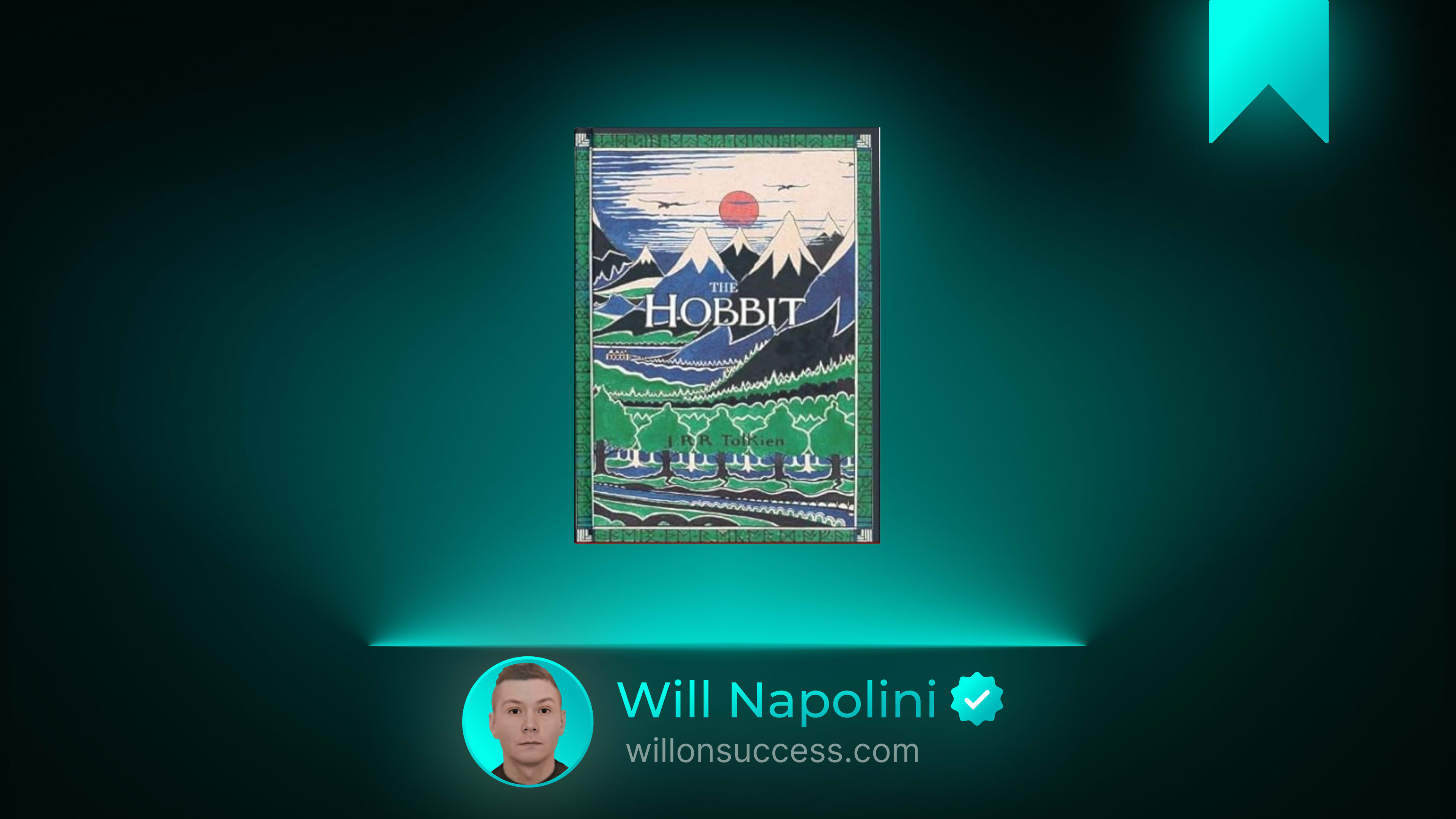
What if the life you are waiting for will not arrive until you step outside the door you have been carefully guarding?
You know the feeling. You have built a comfortable routine. You have arranged your days to minimize friction, to avoid unnecessary risk, to keep things predictable. And yet, something in you keeps whispering that comfort is quietly becoming confinement. You wonder if you are meant for more, but the gap between where you are and where you want to be feels too wide to cross. You wait for the perfect moment, the perfect plan, the perfect version of yourself before you move.
If I could sit across the table from you, I would tell you this: readiness is rarely something you achieve before you begin. It is something you collect along the way.
J.R.R. Tolkien’s The Hobbit is frequently shelved as a work of fantasy, but beneath the dragons, dwarves, and ancient maps lies one of the clearest blueprints for human growth ever written. It is not a story about a born hero who sets out to prove his greatness. It is a story about an ordinary person who agrees to go anyway, discovers what he is actually made of, and returns home changed.
The central idea is simple, though living it is anything but easy: growth does not wait for you to feel confident. It begins when you step into uncertainty, face what frightens you, and choose to keep moving. External results rarely arrive before internal development. You do not become the kind of person who handles difficulty by avoiding it. You become that person by walking toward it, one careful step at a time.
Let me show you how this works, why it matters, and what you can do with it starting today.
The Reluctant Departure
Bilbo Baggins begins his story exactly where many of us begin ours: perfectly content, mildly restless, and deeply invested in protecting his peace. He values good meals, clean linen, quiet evenings, and a life free from unexpected guests. His hobbit-hole in the Hill is a monument to predictability. Everything has a place. Everything runs smoothly.
Then a wizard arrives. Then a company of dwarves. Then a contract asking him to leave his comfortable life behind and join a dangerous quest to reclaim a stolen mountain.
Bilbo’s immediate reaction is not courage. It is resistance. He protests. He panics. He lists every practical reason why this is a terrible idea. And in a moment that Tolkien captures with quiet precision, Bilbo feels something strange pull at him. He does not feel brave. He feels a quiet, stubborn tug toward the unknown. He packs a few essentials, steps out the round green door, and begins to walk.
This is the moment everything changes. Not because Bilbo suddenly becomes fearless, but because he chooses movement over paralysis. He does not know how the journey will end. He does not possess hidden weapons or ancient training. He simply agrees to go.
What I have learned from watching people try to change their lives is that we vastly overestimate the amount of certainty we need before we begin. We wait until fear disappears. We wait until we feel fully prepared. We wait until the path looks completely clear. But clarity rarely arrives in advance. It arrives in pieces, handed to you only after you take the first step. Bilbo’s journey teaches us that courage is not the absence of hesitation. It is the decision to move despite it.
Your Comfort Zone Is a Waiting Room, Not a Destination
Comfort is not the enemy of growth. Complacency is.
There is nothing wrong with wanting a quiet life. There is everything wrong with allowing quietness to become stagnation. When you arrange your days to avoid all friction, you are not protecting your peace. You are shrinking your capacity. The muscles of your character require resistance to strengthen. Without it, they atrophy.
Bilbo’s comfortable hobbit-hole was safe, but it was also a closed loop. Nothing entered that he did not invite. Nothing challenged him that he could not control. The dwarves’ arrival was disruptive, yes, but disruption is often the exact mechanism life uses to wake you up. Growth rarely announces itself politely. It knocks loudly, leaves a mess, and asks you to step into a room you have never entered.
I have seen this play out in careers, relationships, and personal ambitions. You stay in a job that drains you because the routine is familiar. You avoid a difficult conversation because you fear the conflict. You postpone a project because you are not sure it will succeed. Each choice feels rational in the moment. Over time, however, they compound into a life that feels smaller than it should be.
Comfort is a waiting room. It is fine to rest there occasionally, but it is not a place to build your life. When you recognize that your hesitation is costing you more than your fear, the equation shifts. You stop asking, “What if I fail?” and start asking, “What if I never try?”
How this looks in real life: You do not need to burn down your current life to build a new one. You need to introduce deliberate friction. Apply for the role that stretches you. Have the conversation you have been avoiding. Start the project with imperfect materials. Discomfort is the toll road for growth. Pay it willingly, and watch what opens up.
Courage Is a Practice, Not a Personality Trait
We tend to treat courage as a fixed trait. Either you are a brave person, or you are not. This is a dangerous misunderstanding. Courage is not a personality type. It is a behavior you repeat until it becomes familiar.
Bilbo does not suddenly transform into a warrior the moment he leaves the Shire. He trips. He gets lost. He complains. He misses his armchair. He doubts himself constantly. But each time a trial appears, he does something small and difficult. He solves a riddle in the dark. He navigates a forest without a map. He sneaks into a dragon’s lair. He negotiates when violence would be easier. Each action is modest. Together, they build a person capable of handling what once terrified him.
This is how character actually develops. Not through a single dramatic breakthrough, but through a sequence of small, repeated choices to act when you would rather retreat. You do not wait for confidence to arrive. You act, and confidence follows as a byproduct.
I have watched people wait years for the “right mindset” before beginning something that mattered. They read books. They take courses. They analyze their fears. They prepare. And while they prepare, someone else is out there making mistakes, adjusting course, and building the exact confidence they are waiting to feel. You cannot think your way into courage. You can only move your way into it.
What this means for you: Stop treating fear as a stop sign. Treat it as a compass. The thing that makes your stomach tighten is often the exact thing you need to face next. Choose one small action that scares you. Do it. Notice that you survive it. Do it again. Courage is simply familiarity with difficulty.
Small, Clever Moves Outlast Grand, Reckless Gestures
When we imagine transformation, we picture dramatic gestures. We want the bold announcement, the sweeping change, the cinematic moment of triumph. Real growth rarely looks like that. It looks quiet. It looks consistent. It looks like a series of small, thoughtful moves that compound over time.
Throughout the journey, Bilbo rarely wins through brute force. He wins through observation, timing, and cleverness. He does not fight the trolls head-on; he stalls them until dawn. He does not battle the spiders with a sword; he uses his wits and a small blade to cut them down one by one. He does not confront Smaug with weapons; he talks to him, studies him, and finds a weakness others missed. He relies on patience over panic, strategy over spectacle.
We live in a culture that celebrates intensity and ignores consistency. We admire the person who trains for three weeks and then quits, while overlooking the person who trains for thirty minutes a day for two years and quietly becomes exceptional. The truth is simple: small actions repeated faithfully will always outperform dramatic bursts of effort that burn out.
Bilbo’s journey mirrors the reality of skill-building, habit formation, and long-term projects. You do not need to overhaul your entire life overnight. You need to identify the leverage points. Where can you apply a little pressure consistently? Where can you work smarter instead of harder? Where can you observe before you act? The quiet approach is not weak. It is sustainable.
How to apply this: Choose one area where you have been relying on intensity instead of consistency. Break it into a daily or weekly practice so small that it feels almost trivial. Track it. Protect it from your own impatience. Let time do the heavy lifting. You will be surprised how far a hundred small, deliberate steps will carry you.
Who Walks With You Determines What You Carry
Bilbo does not travel alone. He travels with a company of dwarves, a wizard, and later, allies across the wider world. His journey is shaped profoundly by the people around him. Some push him forward. Some doubt him. Some nearly get him killed. Some save his life. He learns quickly that a quest is never a solo endeavor.
I have learned this through years of mentoring and watching people navigate their own difficult seasons. You will not outwork a bad circle. You will not out-strategy a toxic environment. The people you allow close to your life quietly set the standard for what you accept from yourself. They either anchor you to your old habits or pull you toward your next version.
The dwarves in Tolkien’s story are not perfect companions. They are proud, stubborn, and at times reckless. But they also carry loyalty, purpose, and a shared mission. Bilbo’s growth is accelerated by his need to contribute, to prove his worth, and to learn their ways. He does not become a better version of himself in isolation. He becomes better through friction, responsibility, and shared struggle.
This is a hard truth to swallow when you prefer to work alone. Independence is a strength until it becomes a limitation. The right people will challenge your excuses. They will hold you to a higher standard. They will remind you of your commitment when your motivation fades. They will also disappoint you sometimes, because people are imperfect. That is why discernment matters. You do not need a perfect circle. You need a purposeful one.
What to do next: Look at the five people you spend the most time with. Ask yourself honestly: Do they pull me toward growth, or do they anchor me to comfort? You do not need to cut people out dramatically. You do need to intentionally seek out those who take their own growth seriously. Spend more time with them. Ask better questions. Listen closely.
The Hoard Will Always Ask for More
Not every lesson in the book is about stepping forward. Some of the most important lessons are about knowing when to stop reaching.
The dwarves’ mountain holds a vast treasure, and with it comes a subtle poison: the belief that more will finally bring peace. Thorin Oakenshield begins the journey with a noble purpose. By the end, he is consumed by what the story calls “dragon sickness.” The gold does not satisfy him. It isolates him. It turns him against his friends, his honor, and eventually, his own judgment. The treasure becomes a weight rather than a gift.
Bilbo, meanwhile, takes only a small share. He values peace, fairness, and relationships over accumulation. He understands a truth that many of us learn only after years of chasing: enough is a boundary you set, not a finish line you reach.
We live in an economy designed to keep us wanting. More money. More recognition. More followers. More achievements. The problem is never the pursuit itself. The problem is failing to define what “enough” looks like before you start running. Without that boundary, you will trade your health for productivity, your relationships for status, and your peace for a number that keeps moving.
Growth is not the same as accumulation. You can grow in character without growing in consumption. You can improve your circumstances without letting them define your worth. The moment you confuse what you have with who you are, you become vulnerable to the same sickness that grips the mountain.
How to protect yourself: Write down what “enough” looks like in your current season. Not in fantasy. In reality. How much income actually covers your needs and allows you to live well? How much recognition is necessary before you can feel secure? How many achievements do you need before you allow yourself to rest? Define it. Return to it when the noise grows loud. Guard it fiercely.
Why This Matters on an Ordinary Tuesday
It is easy to feel inspired by a story about elves, dragons, and ancient kings. It is harder to see how it applies to your Tuesday morning commute, your overflowing inbox, your quiet anxieties about the future. But the principles do not change just because the setting does.
When you choose to leave your comfort zone, you are not signing a contract with wizards. You are applying for a new position, starting a difficult conversation, or finally building that system you have been avoiding. When you practice courage, you are not fighting trolls. You are showing up to the gym when you are tired, speaking up in a meeting when you would rather stay quiet, or admitting you were wrong when it would be easier to deflect. When you rely on small, clever moves, you are not navigating enchanted forests. You are breaking large projects into daily tasks, automating repetitive work, and protecting your focus from distractions. When you evaluate your circle, you are not sitting around a campfire with dwarves. You are deciding who gets access to your time, your trust, and your energy. When you define enough, you are not guarding a mountain. You are closing the browser tab that tempts you to compare yourself, turning off notifications that drain your attention, and choosing presence over perpetual striving.
The book’s magic is not in its creatures. It is in its mirror. Bilbo’s journey shows you that transformation does not require a different personality. It requires different choices, repeated consistently, in the direction you actually want to go.
A Practical Path Forward
Understanding these ideas will not change your life. Applying them will. Here is how to turn them into behavior starting this week.
1. The Tuesday Test. Choose one action you have been postponing because it makes you uncomfortable. It does not need to be monumental. It needs to be meaningful. Schedule it for tomorrow. Complete it before you open social media or check non-urgent messages. Notice what happens to your momentum afterward.
2. The Barrel Escape Plan. Identify one situation where you feel stuck. Write down three small steps that would move you an inch forward. Do not plan the entire journey. Plan the next inch. Execute it within forty-eight hours.
3. The Circle Audit. Look at the people you interact with most. Write down two names who actively encourage your growth, and two names who consistently pull you back toward old habits. Do not burn bridges. Adjust proximity. Invest more time in the former. Protect your boundaries with the latter.
4. The Enough Boundary. Take ten minutes to write down what “enough” means for you right now in three areas: work, relationships, and personal energy. Keep this note visible. When you feel the urge to overcommit, overwork, or overconsume, read it. Let it guide your next decision.
These are not grand gestures. They are quiet adjustments. They work because they are repeatable. They compound. They build the kind of person who no longer needs to wait for permission to begin.
Who Should Read This Book
The Hobbit is worth reading if you feel stuck in a comfortable routine that no longer serves you, if you tend to overprepare before taking action, or if you need a reminder that ordinary people are capable of extraordinary growth when they choose to step forward. It is especially valuable for anyone who has convinced themselves they are not “the type of person” who handles difficulty well.
It is less useful if you are looking for a rigid, step-by-step business manual or a quick tactical guide to productivity. Tolkien was not writing a handbook. He was writing a story about human nature. The value comes from reflection, not prescription. You will need to do the work of translation yourself. But if you are willing to read it slowly, notice the patterns, and apply them to your own path, you will find more than entertainment. You will find a mirror.
One Small Step
Before you close this article, do this:
Open a blank document or take a clean sheet of paper. Write down one thing you have been avoiding because it makes you nervous. Break it into a single action that takes less than fifteen minutes. Do that action today. Not tomorrow. Not when you feel ready. Today.
You will not feel like a hero afterward. You will feel like someone who finally moved. And that feeling, repeated enough times, becomes a life.
The Path Ahead
Bilbo Baggins returns to his hobbit-hole at the end of the story, but he is not the same hobbit who left. He writes poetry. He keeps his maps on the wall. He welcomes travelers. He still loves his quiet evenings, but he no longer fears the road. The comfort remains. The confinement is gone.
This is what growth actually looks like. You do not lose yourself in the process. You uncover yourself. You trade the illusion of safety for the reality of capacity. You learn that fear does not disappear. It simply loses its vote.
You may be working hard and still wondering why nothing is changing. The answer rarely lies in working harder. It lies in stepping into the space that frightens you, acting before you feel ready, and trusting that small, consistent choices will build the person you are trying to become.
Pick one door you have been avoiding. Open it. Walk through. Let the journey teach you what you are capable of carrying, and what you are wise enough to leave behind.
The world does not need you to be fearless. It needs you to be willing.