The Architecture of the Mind: What Dan Brown's 'The Lost Symbol' Teaches Us About Hidden Human Potential
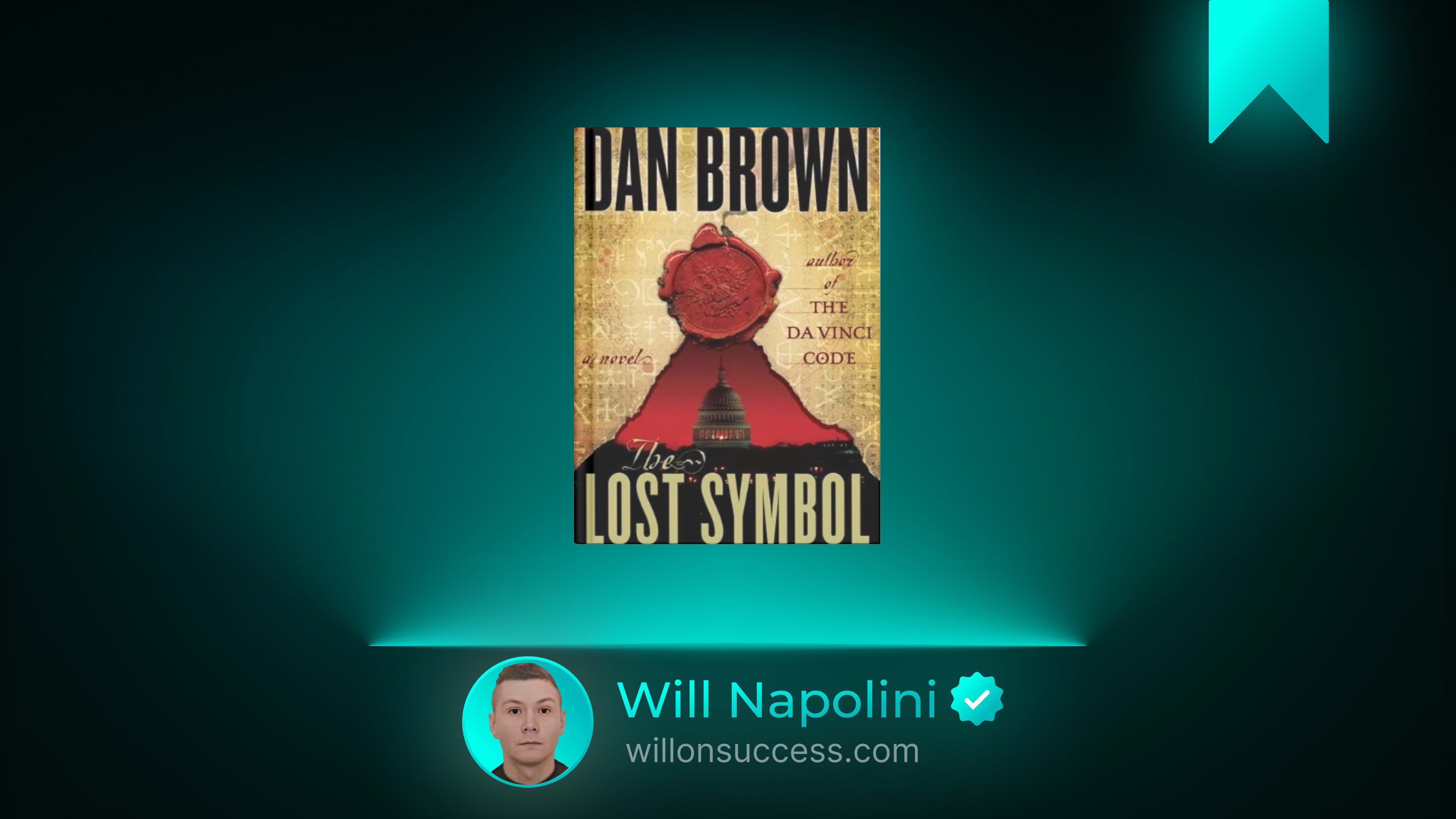
Most of us spend our lives looking outward for the answers we desperately need. We search for a better system, a new mentor, a different city, or a hidden secret that will finally unlock the life we want. But if I could sit across the table from you today, I would ask you to consider a different possibility: What if the greatest mystery you are trying to solve is actually hiding within you?
When Dan Brown released The Lost Symbol, millions of readers raced through the streets of Washington, D.C., trying to decode Masonic riddles and ancient ciphers alongside symbologist Robert Langdon. It is, on the surface, a masterfully crafted thriller. But if you look past the breathless chases and historical puzzles, you will find a surprisingly deep philosophical exploration of human potential.
The Big Idea
The central thesis of The Lost Symbol is not really about a hidden treasure map or a physical artifact. The “Ancient Mysteries” that the characters are chasing point to a single, transformative idea: the ultimate creative power and the deepest truths of the universe are not located in the heavens or in some secret vault. They reside within human consciousness.
Brown uses the fictional framework of “Noetic Science”—the study of how human thought and intention can influence the physical world—to ask a question that every person on a path of growth must eventually face: Are you using the power of your own mind, or are you letting it run on autopilot?
The Story or Concept
Imagine a labyrinth built not of stone, but of symbols, history, and the architecture of a nation’s capital. In the novel, Langdon is thrust into a deadly race against time to find a secret believed to hold the power of the Ancient Mysteries. His guide in this intellectual journey is Katherine Solomon, a scientist studying the measurable weight of human thought and the tangible impact of intention on matter.
On the other side of the chase is Mal’akh, a figure consumed by darkness, trauma, and a corrupted desire for power. The contrast between these paths forms the emotional core of the book. One path seeks to unlock human potential through enlightenment, discipline, and a desire to elevate humanity. The other seeks to force the universe to bend to a wounded ego.
What I have learned from studying stories like this is that the external chase always mirrors an internal reality. The symbols Langdon decodes are metaphors for the mental frameworks we must decode in our own lives.
The Major Principles
The Mind is the Architect of Reality
In the book, the concept of Noetic Science suggests that focused thought has a measurable impact on the physical world. While the real-world scientific validity of this specific concept is heavily debated by skeptics, the underlying psychological truth is undeniable.
What you focus on expands. When your mind is cluttered with fear, resentment, and the belief that you are a victim of circumstance, your actions reflect that chaos. We often treat our minds like a public park, letting anyone and anything walk through and leave their trash behind. We consume outrage, we dwell on past failures, and then we wonder why our external reality feels chaotic.
But when you cultivate a mind focused on clarity, purpose, and deliberate intention, your external life begins to reorganize itself around that focus.
You do not need mystical powers to change your life. You simply need to recognize that your thoughts are the blueprints of your reality. A small decision becomes a direction, and a direction repeated long enough becomes a life. If you want to build a different life, you must first become a different architect.
The True “Lost Symbol” is Within You
Throughout the novel, the characters are looking for a physical location, a hidden chamber, or a magical artifact. But the ultimate revelation of the Ancient Mysteries is that the “Lost Symbol” is a metaphor for the individual human soul, teaching that humans contain all the answers to their questions within them.
We are conditioned to look for external validation. We wait for a boss to promote us, a partner to complete us, or a lucky break to save us. But the mentor in you—the part of you that knows the truth—understands that the power to create meaning is already inside you.
External results often begin with internal development. When you stop waiting for the world to give you permission to be great, and instead realize that the capacity for greatness is your birthright, everything changes. You stop searching for the map and start walking the path.
Knowledge Requires Purity of Purpose
The antagonist in The Lost Symbol is a tragic figure. He possesses immense knowledge, resources, and discipline, but his mind is poisoned by unhealed trauma and a desire for vengeance. He seeks the Ancient Mysteries not to elevate himself, but to dominate others.
This highlights a principle I have seen play out in the lives of many ambitious people: capability without character is a dangerous thing. You can learn every productivity hack, read every leadership book, and build immense wealth, but if your internal foundation is built on fear, insecurity, or the need to prove others wrong, your achievements will eventually collapse under their own weight.
Growth before achievement. The goal of personal development is not merely to get something; it is to become someone capable of sustaining it. True wisdom requires a pure purpose. Ask yourself: Why do I want what I want? If the answer is rooted in ego, the journey will be exhausting. If it is rooted in growth and contribution, the journey will sustain you.
Why It Matters
Why should you care about the philosophical underpinnings of a fictional thriller? Because the symbols we chase in our daily lives dictate our happiness.
If you believe the “lost symbol” of your success is a specific number in your bank account, a certain job title, or the approval of your peers, you will spend your life running through a labyrinth, constantly feeling like you are one clue away from peace.
But what changes when you apply the book’s central idea to an ordinary Tuesday?
You wake up and realize that your peace, your focus, and your power are not dependent on the traffic, the emails in your inbox, or the opinions of others. You realize that the ancient mystery of how to live a good life is solved by mastering your own mind. You stop outsourcing your power to your circumstances.
Practical Application
Understanding is valuable, but understanding without action changes nothing. Here is how you can turn the themes of The Lost Symbol into daily behavior:
- Audit Your Mental Architecture: Just as Langdon decodes symbols to find the truth, decode the “symbols” in your environment. What messages are you absorbing daily? Choose one source of mental clutter—a toxic social media feed, a negative news habit, or a pessimistic podcast—and replace it with something that elevates your thinking.
- Practice Deliberate Intention: Before starting your most important task of the day, take sixty seconds to sit in silence. Define exactly what you intend to achieve and how you intend to feel while doing it. Direct your mental energy before you apply your physical energy.
- Examine Your “Why”: Write down your biggest current goal. Then ask yourself: “Am I pursuing this to build something meaningful, or to prove something to someone else?” Let the answer guide your next step.
Who Should Read This Book
The Lost Symbol is highly entertaining for anyone who loves history, puzzles, and fast-paced mysteries set against the backdrop of Washington D.C.’s hidden societies.
If you are fascinated by the intersection of ancient philosophy, Freemasonry, and the early concepts of consciousness studies, you will find the world-building incredibly rich.
However, if you are a strict realist who dislikes the blending of speculative science, mysticism, and thriller tropes, the heavy reliance on “Noetic Science” might stretch your suspension of disbelief. But if you are willing to read it not as a scientific textbook, but as a modern allegory for the journey of self-discovery, it offers a thrilling reminder of your own untapped potential.
One Small Step
You do not need to decode a centuries-old cipher to change your life today.
Here is your one small step: Tonight, before you go to sleep, write down one limiting belief you hold about yourself—the idea that you are not smart enough, strong enough, or capable enough to achieve what you want. Then, cross it out. Below it, write the truth of who you are becoming.
The greatest mysteries of your life are not waiting to be found in the world. They are waiting to be realized within you. The symbol was never lost; you just forgot where to look.