The Hidden Cost of the Shortcut: What The Poky Little Puppy Teaches Us About Systems, Fairness, and Focus
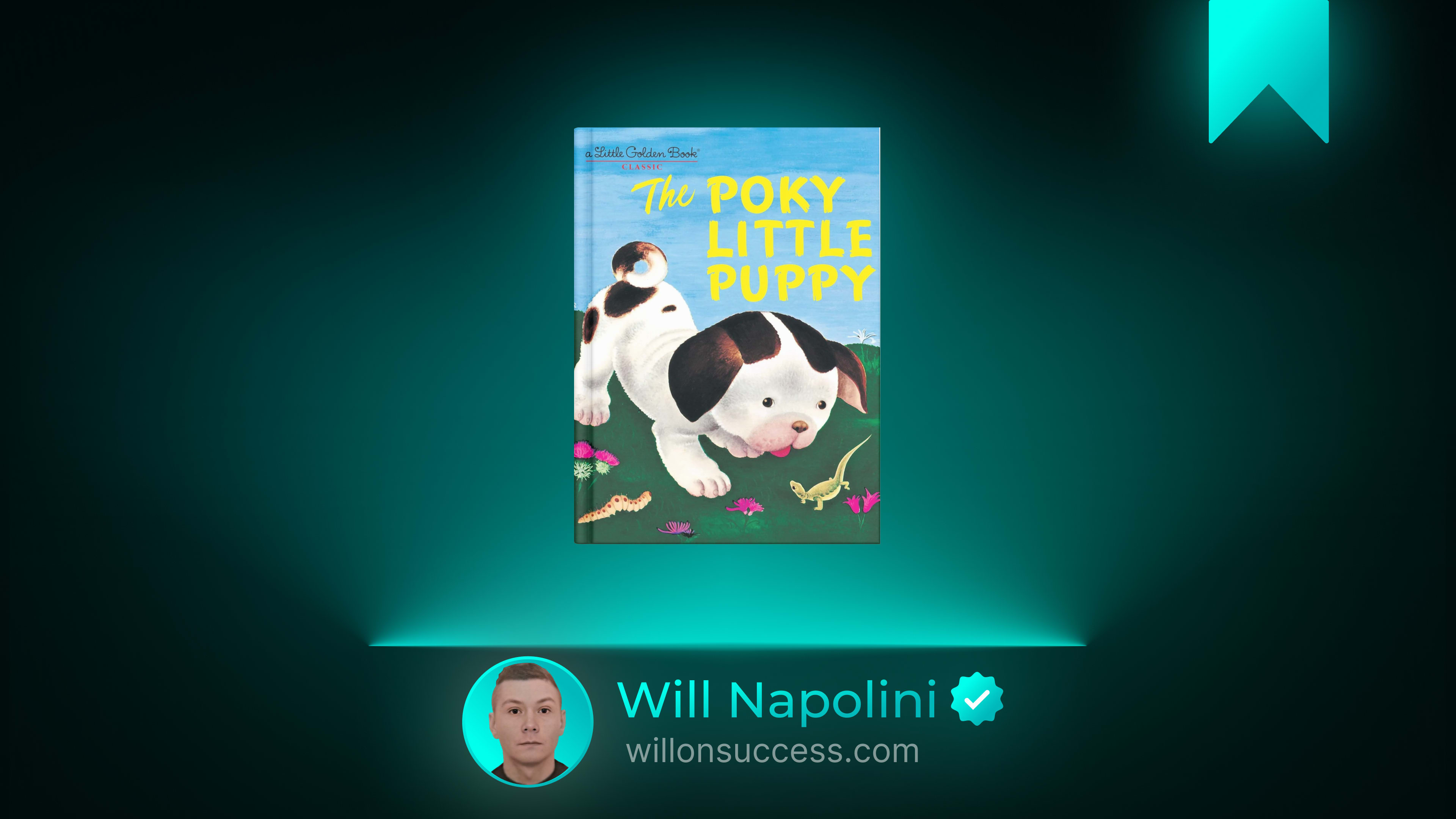
Some of the most piercing insights into human behavior are not found in three-hundred-page business manuals or dense psychological treatises. Sometimes, they are hidden in twenty-four pages of illustrated rhyme, written for children who have not yet learned to tie their shoes.
If I could sit across the table from you, I would ask you to think back to the stories you heard before you understood the complexities of the adult world. There is a reason certain stories endure for generations. They endure because they map perfectly onto the unchanging realities of human nature.
Janette Sebring Lowrey’s 1942 classic, The Poky Little Puppy, is one of the best-selling children’s books in history. On the surface, it is a charming tale about five puppies, a hole under a fence, and a series of missing desserts. But if you read it with the eyes of an adult trying to build a meaningful, sustainable life, it transforms into a masterclass on the illusion of shortcuts, the fragility of trust, and the inevitable rebalancing of human systems.
Let us look at what this little book is actually trying to tell you.
The Big Idea
The central thesis of The Poky Little Puppy is deceptively simple: You cannot permanently extract the rewards of a system without respecting its boundaries, and the shortcuts we take to avoid discipline will eventually dismantle the very structures that provide our rewards.
We all want the dessert. We all want the outcome. But this story forces us to ask a deeply uncomfortable question: Are you earning your rewards through alignment and patience, or are you quietly exploiting the patience of those around you?
The Story of the Hole and the Dessert
To understand the principle, we must first look at the mechanism of the story.
Five little puppies dig a hole under a fence to explore the meadow beyond. Their mother warns them that if they are not good, they will not get dessert. Over the next few days, a pattern emerges. Four of the puppies go out to the meadow, but they return home early, wait patiently, and are rewarded by their mother with a treat: strawberry shortcake on the first day, rice pudding on the second, and custard on the third.
But the fifth puppy—the poky little puppy—has a different strategy.
He is easily distracted. He stays behind in the meadow to smell the flowers, chase the butterflies, and enjoy the immediate pleasures of the moment. He comes home late. But because he is small, and because he spent his extra time digging the hole under the fence a little bit bigger each day, he is able to sneak back into the yard after the others are asleep. He then eats the dessert that the mother left for the good puppies.
For three days, his strategy works flawlessly. He gets the best of both worlds. He gets the unstructured freedom of the meadow, and he gets the reward meant for the disciplined. He thinks he has outsmarted the system.
But on the fourth day, the system shifts. The other four puppies realize what is happening. They decide that they, too, want to stay out late and dig the hole. When the poky little puppy finally wanders home, expecting to sneak in and eat the chocolate custard, he finds the hole is now massive. But when he gets inside, he discovers that the other four puppies have already eaten his dessert.
He is left with nothing.
The Illusion of the Unearned Reward
We live in a culture that idolizes the “life hack.” We are constantly looking for the loophole, the shortcut, the secret back door that will allow us to bypass the tedious work of discipline and arrive directly at the reward.
The poky little puppy is the ultimate symbol of this mindset. He did not want to do the waiting. He did not want to respect the boundary of the fence. He wanted the strawberry shortcake without the sacrifice of coming home on time.
In the short term, his cleverness worked. He found a loophole. But here is what I have learned from watching people try to hack their way through life: A shortcut that relies on someone else’s patience is just a debt you haven’t paid yet.
When you take a shortcut that depends on another person carrying the burden of the system, you are not actually creating value. You are merely redistributing it. In a business, this looks like the employee who leaves at 4:00 PM every day to play golf, knowing their dedicated colleague will stay late to finish the project, yet both share the same year-end bonus. In a marriage, it looks like the partner who avoids the mental load of managing the household, knowing the other partner will eventually pick up the slack to keep the family functioning.
The poky puppy thought he was winning. In reality, he was quietly bankrupting the goodwill of his environment.
Systems Always Seek Equilibrium
The most profound moment in the book is not when the puppy eats the dessert. It is the morning of the fourth day, when the other four puppies look at each other and change their behavior.
They say, in essence, “We want to dig, too.”
This is the law of systems equilibrium. Human beings have a remarkable tolerance for unfairness, but they do not have an infinite tolerance for it. When you exploit a system, the system eventually corrects itself. The people who have been carrying the load, waiting patiently, and playing by the rules will eventually reach a breaking point. And when they do, they will not just stop helping you; they will adopt your exact, flawed behavior to protect themselves.
I have seen this happen in organizations all the time. A leader allows one “rockstar” employee to bypass standard protocols, ignore meetings, and operate by their own rules because they produce good results. The leader thinks they are managing a genius. But the rest of the team is watching. Eventually, the rest of the team decides that if the rules do not apply to the rockstar, they do not apply to anyone. The culture fractures. The system collapses.
The mother in the story did not have to punish the poky puppy. She did not have to lecture him. She simply allowed the natural equilibrium of the system to restore itself. The other puppies adapted, and the poky puppy was forced to experience the exact consequences he had been inflicting on them.
If you are currently frustrated that the people around you are no longer accommodating your shortcuts, ask yourself if you pushed them to their breaking point.
“Pokiness” is Just Distraction Disguised as Exploration
It is easy to view the poky little puppy as selfish, and he was. But it is also important to recognize why he was late.
He was not late because he was doing something malicious. He was late because he was captivated by the meadow. He stopped to smell the sweet grass. He chased the green lizard. He watched the butterflies. He was entirely absorbed in the immediate, sensory pleasures of the present moment.
How often do we do the exact same thing?
We call it “living in the moment.” We call it “following our curiosity.” But when that curiosity pulls us away from our primary commitments, it is just distraction wearing a respectable disguise.
The meadow is beautiful. The side projects are interesting. The new opportunities are shiny. But if you are supposed to be home by dinner—if you have made a commitment to a partner, a client, or your own long-term goal—stopping to chase every butterfly is not a virtue. It is a failure of focus.
Growth requires the ability to walk past a beautiful distraction because you are committed to a deeper reward. The poky puppy traded a lifetime of trust and a guaranteed chocolate custard for a few extra minutes of chasing bugs. He confused the immediate with the important.
Cleverness vs. Wisdom
The story draws a sharp line between two traits we often confuse: cleverness and wisdom.
Cleverness is the ability to find the hole under the fence. It is the ability to see the loophole, optimize the technicality, and get what you want right now. The poky puppy was very clever. He figured out exactly how big the hole needed to be to sneak in after the others were asleep.
Wisdom, however, is the ability to see the long-term consequences of exploiting that hole. Wisdom understands that a system built on trust and shared sacrifice is more valuable than any single piece of strawberry shortcake.
Cleverness asks, “Can I get away with this?” Wisdom asks, “What happens to the system if everyone does this?”
You do not need more cleverness in your life. You have enough cleverness to find the shortcuts. What you need is the wisdom to choose not to take them. You need the character to stand at the edge of the meadow, look at the beautiful distractions, and choose to walk back through the gate on time.
Why This Matters on an Ordinary Tuesday
You might be wondering how a story about puppies and pudding applies to your life right now.
Think about your daily routines. Think about your health. You cannot eat poorly, skip sleep, and avoid exercise, and then expect to “hack” your way into vitality with a weekend detox or a new supplement. The biological system will eventually seek equilibrium, and it will do so in the form of illness or fatigue. You cannot cheat the fence of human biology.
Think about your finances. You cannot consistently spend more than you earn, relying on credit to fill the hole under the fence, and expect to eventually feel secure. The financial system will rebalance, usually through the harsh mechanism of compounding interest.
Think about your relationships. You cannot withdraw more emotional support, patience, and grace than you deposit, and expect the relationship to remain warm. The emotional system will rebalance through distance and resentment.
What you repeat in private eventually becomes visible in your life. The hole you dig to sneak around your responsibilities will eventually become large enough for your consequences to walk right through.
Practical Application: Auditing Your Inner Puppy
Understanding this concept is valuable, but understanding without action changes nothing. If you want to apply the wisdom of this story, you must audit your life for the places where you are acting like the poky little puppy.
Here is a practical exercise you can do this week:
1. Identify the “Dessert” you are eating. Look at the rewards in your life. Your income, your harmonious home, your good reputation, your physical health. Acknowledge that these are the results of a system working correctly.
2. Find the “Hole” you are digging. Where are you bypassing the required discipline? Are you taking credit for a team project you barely worked on? Are you letting your spouse handle all the emotional labor while you enjoy the peace of a clean house? Are you using debt to maintain a lifestyle your income cannot support? Be brutally honest. The hole is always hidden in the areas we least want to examine.
3. Close the Gap. Choose one area where you have been relying on someone else’s patience or discipline to cover your shortcuts. Step into the gap. Do the waiting. Do the tedious work. Show up on time.
Who Should Read This Book
If you are a parent, The Poky Little Puppy is an essential tool for teaching children about fairness, delayed gratification, and the natural consequences of selfishness. It provides a gentle, narrative framework to discuss why rules exist and why we cannot simply take what we want when we want it.
But this book is equally valuable for adults, particularly leaders, managers, and partners. It is for anyone who has ever felt the quiet guilt of knowing they are getting by on the hard work of others. It is for the entrepreneur who is tempted to cut corners on product quality to boost short-term margins. It is for the individual who feels like they are “hacking” life, but secretly feels the foundation cracking beneath them.
It is not a book that will give you a ten-step framework for maximizing productivity. It is a book that will remind you that character is the only sustainable strategy.
One Small Step
I want you to take one specific action today.
Think of one person in your life—a spouse, a colleague, a friend—who has been patiently covering for your “pokiness.” Think of the person who has been waiting for you, doing the extra work, or carrying the mental load while you were out enjoying the meadow.
Go to them today. Do not make a grand, emotional speech. Simply say, “I realize you have been carrying a lot of the weight in this area, and I appreciate it. From now on, I am going to handle [Specific Task/Responsibility].”
And then, do it. Consistently. Without being asked.
The meadow will always be there. The butterflies will always be flying. The distractions will always be beautiful and inviting. But the deepest satisfaction in life does not come from sneaking through a hole in the fence to take what isn’t yours. It comes from walking through the front gate, looking at the people who waited for you, and knowing you earned your place at the table.
A small decision becomes a direction, and a direction repeated long enough becomes a life. Choose the gate.