The Quiet Engine Running Your Life: What Joseph Murphy Knew About the Subconscious Mind
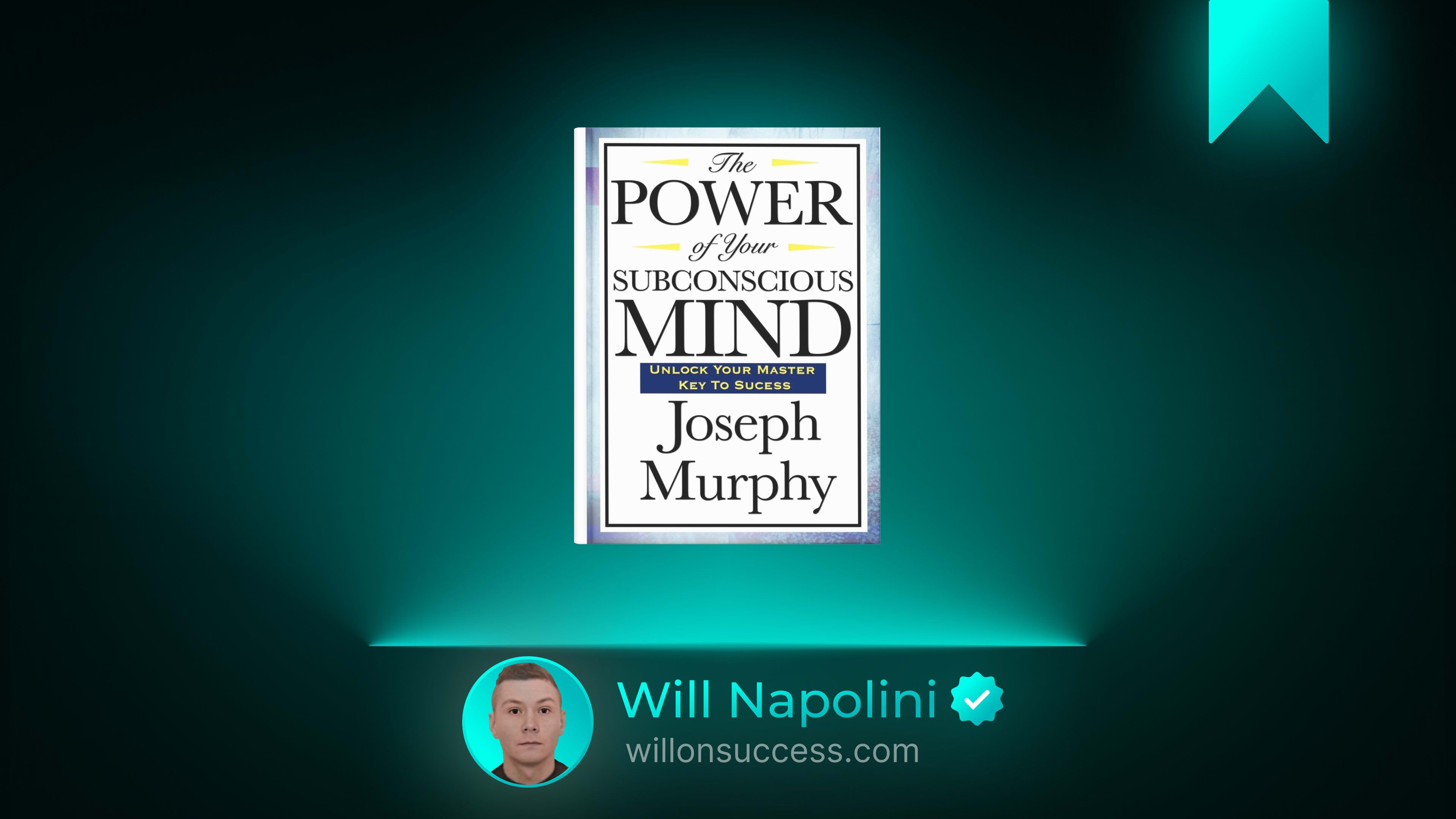
You are running a machine right now that you have never fully learned to operate.
Not your car. Not your phone. I mean the vast, tireless, astonishingly powerful system sitting just beneath your everyday awareness, shaping your moods, your habits, your health, your relationships, and your results—often without your conscious permission.
Joseph Murphy spent decades studying that system. In 1963, he published The Power of Your Subconscious Mind, and it has quietly reshaped how millions of people think about the inner life ever since. The book is not a neuroscience textbook. It is not a clinical manual. It reads more like a long, earnest conversation with a wise old teacher who has seen too many people struggle against themselves and wants to hand them a different map.
If I could sit across the table from you and say one thing before we go any further, it would be this: you are not broken. You are not cursed with some private weakness that no one else struggles with. What you are dealing with, most likely, is a powerful inner system that was programmed by accident—by childhood, by repetition, by fear dressed up as logic—and no one ever sat you down and said, “Here is how you take the wheel.”
Murphy’s book is that conversation. Let me walk you through it.
The Central Idea: You Have Been Gardening Whether You Knew It or Not
Murphy’s core argument is deceptively simple.
Your mind has two working levels. The conscious mind is the part you experience directly—the one reading these words, making plans, arguing with yourself about whether to go to the gym. The subconscious mind is everything beneath that surface: the storehouse of beliefs, memories, emotional patterns, and automatic responses that run in the background twenty-four hours a day.
And here is the part that changes everything once it lands.
The subconscious does not argue with you. It does not evaluate whether a thought is true or kind or useful. It receives. It accepts. It builds. Whatever you impress upon it with enough feeling and repetition, it treats as instruction and works to make real in your behavior, your body, and your circumstances.
Murphy returns to one image again and again, and it is the right one. He compares the subconscious to a patch of fertile soil. It does not care whether you plant corn or nightshade. It will grow whichever seed you drop into it, faithfully, tirelessly, without judgment. Your conscious mind is the gardener. And whether you realize it or not, you have been planting seeds every single day—through the thoughts you entertain, the words you repeat to yourself, the images you rehearse before sleep, the beliefs you absorb without questioning.
The question Murphy presses on you is not whether you are programming your subconscious. You are. You always have been. The question is whether you are doing it on purpose.
The Gatekeeper You Forgot You Had
One of the most practical ideas in the book is what Murphy describes as the conscious mind’s role as a gatekeeper. He borrows an old phrase and calls it “the watchman at the gate.”
Think about what that means for a moment. Every day, you encounter hundreds of suggestions. A colleague says, “You’ll never get that promotion.” A headline tells you the economy is collapsing. An old fear whispers, “Who do you think you are, trying something new?” A parent’s critical voice, recorded decades ago, replays itself in a quiet moment.
Your conscious mind has the capacity to examine those suggestions. To weigh them. To say, “No. That is not what I am choosing to build.”
But most of us never learned to use the gate. We let every anxious thought walk straight through into the subconscious and take root. We rehearse our failures in vivid detail. We narrate our limitations to ourselves in the first person, present tense, with full emotional conviction: “I always mess this up. I’m not the kind of person who can do that. Nothing ever works out for me.”
And the subconscious, faithful gardener that it is, says, “Understood. Growing more of that.”
This is not mystical thinking. You have felt it. You have noticed how a morning spent rehearsing a worst-case scenario makes you clumsy, tense, and self-sabotaging by the afternoon. You have noticed how one harsh comment can echo for weeks while ten kind ones dissolve by lunch. The subconscious weights emotionally charged, repeated, vividly imagined input far more heavily than calm, rational analysis. That is simply how the system is built.
Murphy’s insistence is not that you should deny difficulty or pretend everything is fine. It is that you should stop handing the keys to your inner life to every passing fear and secondhand opinion. You have a gate. Use it.
Feeling Is the Language the Subconscious Actually Speaks
Here is where Murphy’s teaching gets genuinely useful, and where most people’s attempts at “positive thinking” go wrong.
You cannot reprogram your subconscious by repeating words you do not believe. You can stand in front of a mirror and say “I am confident, I am successful, I am at peace” a hundred times, and if the emotional truth underneath those words is “I feel like a fraud and I am terrified,” the subconscious registers the feeling, not the phrase. It always does.
Murphy understood this clearly. The subconscious responds to the emotional tone and the vividness of an idea, not to its logical structure. That is why a single terrifying experience can embed itself for a lifetime while years of calm reassurance slide off the surface. Fear is vivid. Fear is felt in the body. Fear gets priority processing.
So the practical implication is this: if you want to plant a new seed, you cannot just think it. You have to feel it, even in a small, tentative way. You have to give the new idea enough sensory texture and emotional warmth that the subconscious treats it as something real rather than a hollow phrase.
This does not require some dramatic emotional performance. It requires a few quiet minutes of genuine imagining. Picture the version of the situation you want. Notice what it would feel like in your chest, your shoulders, your hands. Let yourself inhabit it for sixty seconds with your eyes closed. That small act of felt imagination is worth more than an hour of mechanical affirmation.
A thought repeated with feeling becomes a belief. A belief repeated long enough becomes a direction. And a direction, walked daily, becomes a life.
The Night Shift: Why the Hour Before Sleep Matters More Than You Think
One of the most memorable ideas in the book, and one Murphy returns to with real conviction, concerns sleep.
While you sleep, the conscious mind—the analytical, critical, arguing part—steps back. The gatekeeper goes off duty. And the subconscious continues working. It processes the day. It consolidates memories. It runs through problems. It rehearses patterns.
Murphy’s practical counsel is straightforward: the thoughts and images you hold in the final minutes before falling asleep carry unusual weight, because they enter the subconscious during a period when the critical, filtering mind is winding down. You are, in a very real sense, giving your subconscious its overnight assignment.
If you fall asleep rehearsing a conflict, replaying an embarrassment, or spiraling through tomorrow’s worries, you are handing your deepest mind a work order it will process for hours. You wake up carrying the residue of that assignment.
If, instead, you spend the last five minutes before sleep quietly picturing a problem already solved, a conversation already healed, a goal already in motion—not with manic excitement, but with the calm, drowsy feeling of “this is working itself out”—you are giving the subconscious something constructive to build with.
You do not need to believe this works perfectly the first night. You need to understand that what you feed your mind in those last waking moments is not neutral. It is input. And input, repeated, becomes architecture.
Repetition Builds the Road
Murphy is honest about something that modern readers sometimes resist: change is not instantaneous. The subconscious was programmed over years. It will not be reprogrammed in an afternoon.
But it can be reprogrammed. That is the whole point of the book.
The mechanism is repetition. A thought held once is a passing cloud. A thought held daily, with feeling, over weeks and months, carves a channel. Eventually, the channel becomes a river. Eventually, the new pattern runs so automatically that it feels like it was always there.
This is the same principle behind learning an instrument, building a physical skill, or mastering a language. The first attempt at a new chord is clumsy and conscious. The hundredth attempt is effortless. The fingers simply know where to go. Your beliefs and self-concepts work the same way. The first time you quietly tell yourself “I am capable of handling this” while your stomach is in knots, it feels absurd. The fiftieth time, it feels plausible. The two-hundredth time, it feels like yours.
You start small. You stay consistent. You let time do its work.
Murphy does not promise that this is fast. He promises that it is real. And for a person who has spent years feeling trapped inside a fixed identity, the distinction between “slow” and “impossible” is the entire difference between giving up and beginning.
What This Looks Like on an Ordinary Tuesday
Let me bring this down to the ground, because ideas that stay in the clouds help no one.
Suppose you have been carrying a quiet belief for years that you are not good enough in your work. You do not announce it. You would not say it out loud at a meeting. But it hums underneath everything. You over-prepare because you fear being exposed. You hesitate to share ideas because you expect them to be dismissed. You interpret neutral feedback as confirmation of your inadequacy.
Murphy’s framework would say this: that belief was planted, probably young, probably by a specific experience or a repeated message. It grew because it was watered daily with anxious rehearsal, self-critical inner speech, and vivid mental replays of every small mistake. It is not a truth about you. It is a deeply grooved pattern in the soil.
And patterns can be replanted.
Not by shouting affirmations into a mirror while secretly feeling ridiculous. But by small, deliberate acts of inner redirection. Catching the old thought and choosing not to rehearse it. Spending three quiet minutes in the evening picturing yourself handling a work conversation with calm competence, and letting yourself feel the relief and steadiness of it. Writing down, before bed, one thing you handled well that day, even if it was small. Refusing to narrate your life in the language of the old wound.
None of those steps is dramatic. Together, over weeks, they begin to shift the soil. The old pattern does not vanish overnight. But new roots start to take hold beside the old ones. And eventually, the new growth is stronger.
Who Should Read This Book, and Who Might Not
The Power of Your Subconscious Mind will resonate most with a reader who has felt stuck in a repeating loop—same anxieties, same self-doubt, same outcomes despite genuine effort—and who suspects that the obstacle is not lack of discipline but something deeper, something running on autopilot beneath conscious control.
It is particularly useful for people dealing with persistent worry, low self-worth, difficulty breaking habits, or a sense that they are always working against themselves. Murphy’s tone is warm, pastoral, and unhurried. He writes like someone who has counseled thousands of people and has infinite patience for the process.
A word of honesty: the book was written in the early 1960s within the New Thought tradition, and it draws freely on religious and metaphysical language. Murphy references scripture, prayer, and spiritual principle alongside psychological observation. If that framing unsettles you, it may require some patience. The core psychological insights—the power of repeated thought, the role of emotion in belief formation, the influence of pre-sleep mental states—are sound and broadly supported by what we now understand about habit, neuroplasticity, and the architecture of attention. But the packaging is of its era.
If you are looking for a rigorous, evidence-based cognitive-behavioral workbook, this is not that book. If you are looking for a gentle, deeply felt introduction to the idea that your inner narrative is not a fixed sentence but a draft you can revise, this is one of the warmest places to start.
One Small Step You Can Take Tonight
I do not want you to close this article and file it away as interesting. Understanding without action is just decoration.
So here is what I would ask you to do. Tonight, in the ten minutes before you fall asleep, put your phone in another room. Lie down. Close your eyes. And for five minutes, picture one area of your life where you keep replaying the worst version of events. A conversation you dread. A project you feel unqualified for. A relationship where you keep expecting the other shoe to drop.
Now, gently, without forcing it, imagine that situation already resolved. Not in a fantasy way. In a quiet, believable way. Picture yourself in the scene, steady. Picture the other person responding reasonably. Notice how your shoulders feel when the fear is not running the show. Breathe into that image. Hold it. Let it be the last thing your mind receives before the gate closes for the night.
Do not judge whether it “works.” Do not evaluate your technique. Just plant the seed.
Tomorrow night, do it again. And the night after that.
You are not performing a ritual. You are learning to speak a language your deepest mind has been waiting, sometimes for decades, to hear from you.
The soil has been waiting for different seeds. Tonight, you choose what to plant. And what you repeat in the quiet eventually becomes the shape of your life.