The Psychology of Money: Why Your Behavior Matters More Than Your Intelligence
There is a quiet lie most of us carry about money, and it goes something like this: If I just knew more—if I understood the right strategy, found the right investment, read the right book—then I would finally be okay.
I used to believe that too. I thought financial success was an intelligence problem. A knowledge problem. A puzzle to be solved by the sharpest mind in the room.
Then I watched people with modest incomes build quiet, unshakable security over decades. And I watched brilliant, high-earning professionals blow through everything they made, not because they lacked information, but because they lacked something harder to teach: the right relationship with their own behavior.
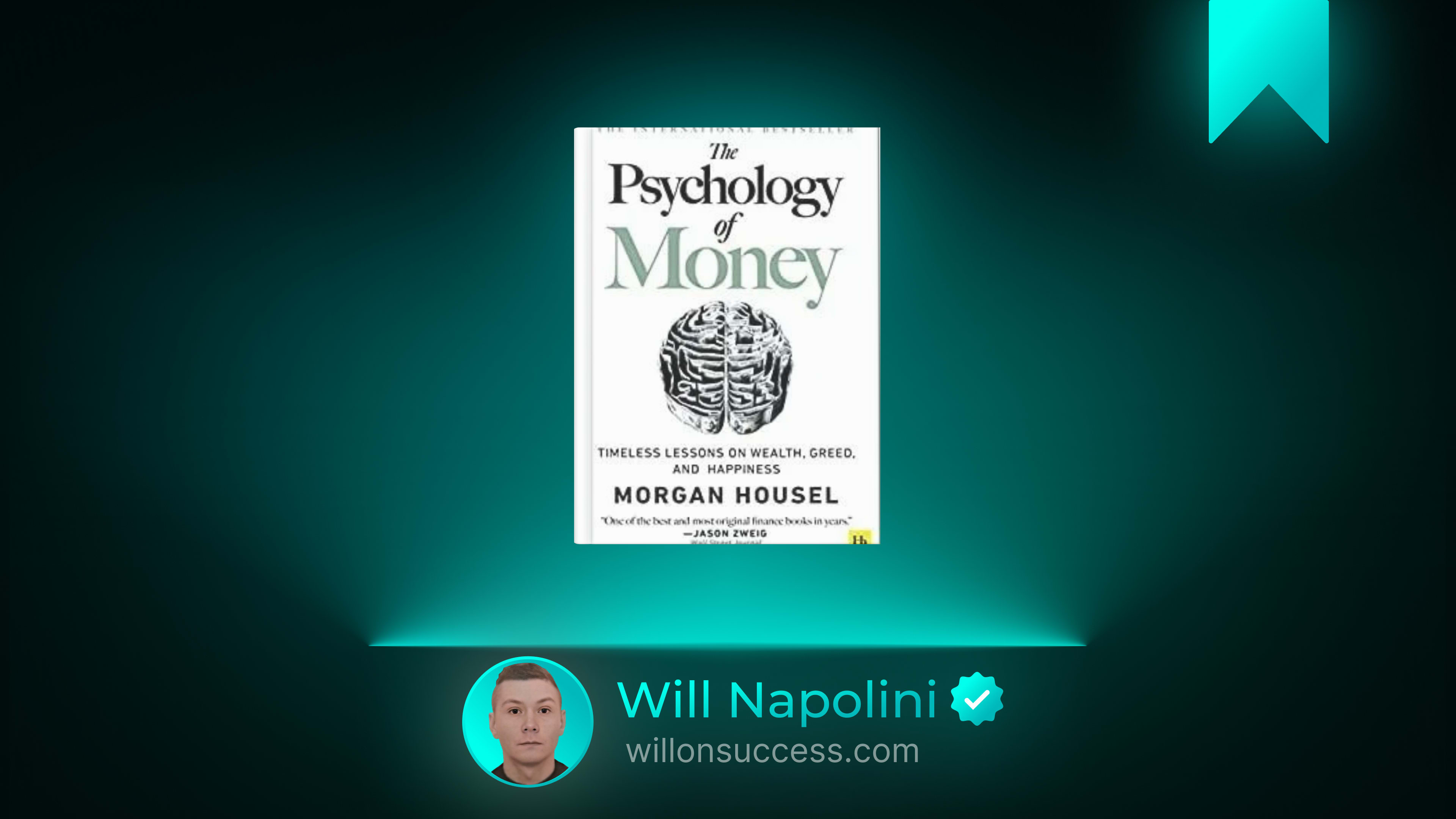
Morgan Housel’s The Psychology of Money is built on exactly this observation. The book’s central argument is deceptively simple: doing well with money has very little to do with how smart you are, and a great deal to do with how you behave. Finance is not primarily a math problem. It is a psychology problem. And that changes everything about how you should approach it.
If I could sit across the table from you right now, coffee cooling between us, I would say this: the most important financial skill you will ever develop is not analysis. It is self-awareness. And Housel’s book is one of the finest maps I have seen for building it.

No One Is Crazy—Everyone Is Playing a Different Game
Housel opens with a principle that disarmed me the first time I encountered it: every person you meet has a different, deeply personal history with money, and that history shapes their financial decisions in ways that look irrational from the outside but make perfect sense from where they stand.
Someone who grew up during a recession, watching a parent lose a job and a home, will carry a different relationship with risk than someone who grew up during a long bull market. Neither is wrong. Neither is stupid. They are simply playing different games shaped by different experiences.
Think about that for a moment. The next time you judge someone for being “too conservative” with their savings or “reckless” with their spending, consider that you are seeing the surface of a decision rooted in years of lived experience you were not part of.
This principle matters because it frees you. You stop trying to copy someone else’s strategy and start asking, What is my own history teaching me? What fears am I carrying? What assumptions did I inherit that I never examined?
Your financial decisions do not happen in a spreadsheet. They happen at the kitchen table, in the memory of an argument about bills, in the quiet anxiety of checking a bank balance at 11 p.m. Housel honors that reality instead of pretending it away.
Compounding Is Boring, and That Is Exactly Why It Works
Here is a fact that Housel presents, and I want you to let it land slowly: the vast majority of Warren Buffett’s net worth was accumulated after his sixty-fifth birthday. Not because his investing suddenly got sharper. Because he had been investing since he early teens, and compounding had decades to do its quiet, unglamorous work.
The lesson is not “become Warren Buffett.” The lesson is about time.
Compounding does not reward the person who finds the single best opportunity. It rewards the person who stays in the game the longest without blowing up. Small, consistent returns, repeated over years, produce results that feel almost unreasonable compared to the effort involved.
You start small. You stay consistent. You let time do its work.
This applies far beyond investing. It applies to skills, relationships, health, reputation. The principle is the same: the most powerful force in building anything meaningful is not intensity. It is duration. A small habit practiced for ten years will outperform a dramatic sprint that lasts three weeks.
If you have been waiting for the perfect moment, the perfect strategy, the perfect amount of money to begin—this is Housel’s gentle challenge to you. The perfect moment does not exist. But time is passing whether you act or not. You can let it pass while you build, or while you wait.
Getting Wealthy and Staying Wealthy Are Different Skills
One of the sharpest distinctions in the book is this: the skills that help you accumulate money are not the same skills that help you keep it.
Getting ahead often requires optimism, risk-taking, and the willingness to swing hard. Staying ahead requires something almost opposite: humility, frugality, and a healthy fear that what you have could be taken away.
Housel points to the long list of fortunes made and then lost, businesses built and then bankrupt, careers that peaked and then collapsed under the weight of one overconfident decision. The pattern is almost always the same. The person who got rich by being bold could not stay rich because they never learned to be careful.
What does this look like in your life? It might mean that the same aggressive energy that helped you land a promotion or launch a business is the energy that tempts you to overextend, to lifestyle-inflate, to assume the good year will always be the normal year.
Staying power is not glamorous. It looks like keeping expenses lower than your income even after your income rises. It looks like an emergency fund that sits in a boring account earning almost nothing, doing its quiet job of keeping one bad month from becoming a crisis. It looks like saying, I have enough, in a culture that is engineered to make you feel you never will.
The Highest Dividend Money Pays Is Control Over Your Time
If there is one idea in this book I would tattoo on the inside of every reader’s mind, it is this: the greatest value of money is not what it buys. It is the ability to wake up in the morning and say, I can do what I want with today.
Housel calls this the highest dividend money pays—autonomy over your time. And he argues, convincingly, that this is what people actually want when they say they want to be rich. They do not want the car. They do not want the square footage. They want to stop being told when to be where, by whom, for how long.
This reframes the entire pursuit. If your goal is autonomy, then the strategy changes. You are not optimizing for the biggest number. You are optimizing for enough margin that your time belongs to you. That might mean a smaller house with no mortgage instead of a bigger one with a payment that chains you to a job you tolerate. It might mean savings that let you walk away from a toxic situation without financial panic dictating your choices.
I have seen people earn impressive salaries and feel utterly trapped. And I have seen people earn modest incomes and feel genuinely free, because they built their lives around a low cost of living and a high degree of control. Neither path is wrong. But only one of them actually delivers what most people say they want.
Wealth Is What You Do Not See
This is a small point that carries enormous weight. Housel draws a clear line between rich and wealthy. Rich is visible. It is the car, the watch, the vacation photo. Wealth is invisible. It is the money not spent. The investments not liquidated. The option not exercised.
You cannot look at someone in a modest car and know whether they have two million in savings. You cannot look at someone in a luxury vehicle and know whether they are one missed payment from disaster. And yet most of us make financial decisions based on what we can see, trying to signal a status that is, by definition, the absence of wealth.
The practical implication is almost uncomfortable: if you want to build wealth, you have to become comfortable being unseen. You have to find satisfaction in the invisible architecture of your life—the savings account, the paid-off debt, the quiet knowledge that you could handle a surprise—rather than in the visible performance of spending.
This is not a moral judgment. It is a mechanical observation. Every dollar spent on signaling is a dollar not compounding in silence. And over twenty or thirty years, that difference is not small. It is enormous.
You Need Room for Error
Housel spends meaningful time on the idea of margin of safety—the space between what you expect to happen and what you need to happen for things to be okay.
The reason is not pessimism. The reason is honesty. The future is uncertain. Plans break. Industries shift. Health changes. Markets fall. None of this is a reason to freeze in fear. It is a reason to build a life that can absorb a hit without shattering.
What does room for error look like on an ordinary Tuesday?
It looks like keeping three to six months of expenses accessible, not because you expect disaster next month, but because you respect the fact that you cannot predict which month will surprise you. It looks like not investing money you will need in the next two years into something that could drop thirty percent. It looks like building a career with more than one skill, more than one income stream, more than one identity tied to a single job title.
The margin is not wasted space. It is the space where your peace of mind lives.
You Will Change, and That Is Okay
One of the quieter chapters in the book addresses something most financial planning ignores: future you is, in many ways, a stranger. The goals you hold at twenty-five will not be the goals you hold at forty-five. The risk you can stomach at thirty will feel different at fifty-five.
Housel’s advice is not to pretend you can predict your future self. It is to avoid extreme commitments in either direction. Do not lock yourself into a lifestyle that requires maximum income forever. Do not swing so conservatively that you miss the years when growth was possible. Aim for a middle path that gives future you room to change their mind.
This is, I think, one of the most compassionate ideas in the book. It says: you are allowed to evolve. You do not owe your twenty-year-old self a life that your forty-year-old self never chose. Build flexibility into the structure.
The Price of Admission Is Volatility, and That Is the Whole Deal
Housel makes a point that I wish someone had made to me years ago: market declines, setbacks, and periods of doubt are not a flaw in the system. They are the fee.
You do not get long-term growth without short-term discomfort. You do not get the reward of compounding without enduring the years where it feels like nothing is happening. You do not get the career breakthrough without the season of uncertainty that precedes it.
The mistake most people make is treating the price as if it were a fine—something that means they did something wrong. It is not a fine. It is a ticket. And the only way to avoid paying it is to never enter the arena, which means you also never receive the reward.
When the market drops, when the project stalls, when the savings feel pitifully small after three years of disciplined effort—remind yourself: this is the admission cost. You are not losing. You are paying for the seat.
Who Should Read This Book
If you have ever felt anxious about money despite earning a decent income, this book will speak to you. If you have ever watched someone make financial decisions you considered foolish and felt frustrated, this book will reframe how you see them. If you are early in your career and feel behind, or mid-career and wondering whether the path you are on actually leads where you think it does, Housel’s perspective will steady you.
This is not a book about stock picks or tax optimization. If you are looking for a technical investment manual, this is not it. It is a book about the human being making the decisions. And because you are, presumably, a human being making decisions, it will likely matter to you.
It is also worth noting: Housel writes with unusual clarity and brevity. The chapters are short. The language is plain. You could read it in an afternoon. But the ideas will keep working on you for much longer than that.
What to Do With This, Starting Today
Understanding without action is just entertainment. So let me give you something concrete.
This week, choose one of the following and actually do it:
Open a note on your phone or grab a piece of paper. Write down the answer to this question: What does “enough” look like for me—not in a vague aspirational way, but in actual numbers, actual lifestyle, actual Tuesday-afternoon reality? Be honest. Be specific. You cannot build toward a target you have not defined.
Look at one recurring expense you have not examined in over a year. Not to feel guilty. Just to ask: Is this still buying me something I actually value, or is it on autopilot? You do not have to cancel it. You just have to look at it with open eyes.
Set up one automatic transfer—even if it is twenty dollars a week—into a savings or investment account you do not touch. The amount is not the point. The habit is the point. You are casting a small, repeated vote for the person you are becoming.
Identify one financial decision you have been postponing because it feels overwhelming. A conversation, a form, a login you have been avoiding. Do the first five minutes of it today. Not the whole thing. Five minutes. That is enough to break the inertia.
You do not need to overhaul your life tonight. You need one honest, small action that moves you from thinking about money to relating to money differently.
The Door Is Open
Here is what I keep coming back to after sitting with Housel’s ideas for years: money is not the main event of your life. But your relationship with money touches every part of your life—your stress, your choices, your freedom, your relationships, your sense of whether the future is a threat or a possibility.
And that relationship is not fixed. It was built by experience, by accident, by messages you absorbed before you were old enough to question them. Which means it can be rebuilt. Deliberately. Slowly. With patience and a little courage.
You do not need to be the smartest person in the room. You do not need to predict the future. You do not need to win every year. You need to understand your own patterns, respect the power of time, leave room for error, and protect the thing that matters most: your ability to choose how you spend your days.
A small decision becomes a direction, and a direction held long enough becomes a life. You do not have to get it perfect. You just have to get started, and then stay.
The next small step is yours. Take it before the coffee gets cold.