The Permissionless Leader: Finding Your Tribe and Leading the Way
Have you ever looked around your workplace, your community, or your industry and thought, Someone really needs to fix this?
You see the inefficiencies. You notice the outdated traditions that no longer serve anyone. You feel the quiet frustration of people who are capable of more but are trapped in a system that demands compliance over creativity. You have ideas about how to make things better.
And then, you wait.
You wait for the person with the right title to notice. You wait for a budget to be approved. You wait for an invitation to speak up. You wait for permission.
If I could sit across the table from you right now, I would tell you a secret that took me years to truly understand: The permission you are waiting for is never going to come. Not because the world is cruel, but because the world is distracted.
The people at the top are often just as overwhelmed as you are. The systems we inherited were built for a different era. And the person who is going to step up and connect the dots, gather the people, and light the fire? That person is supposed to be you.
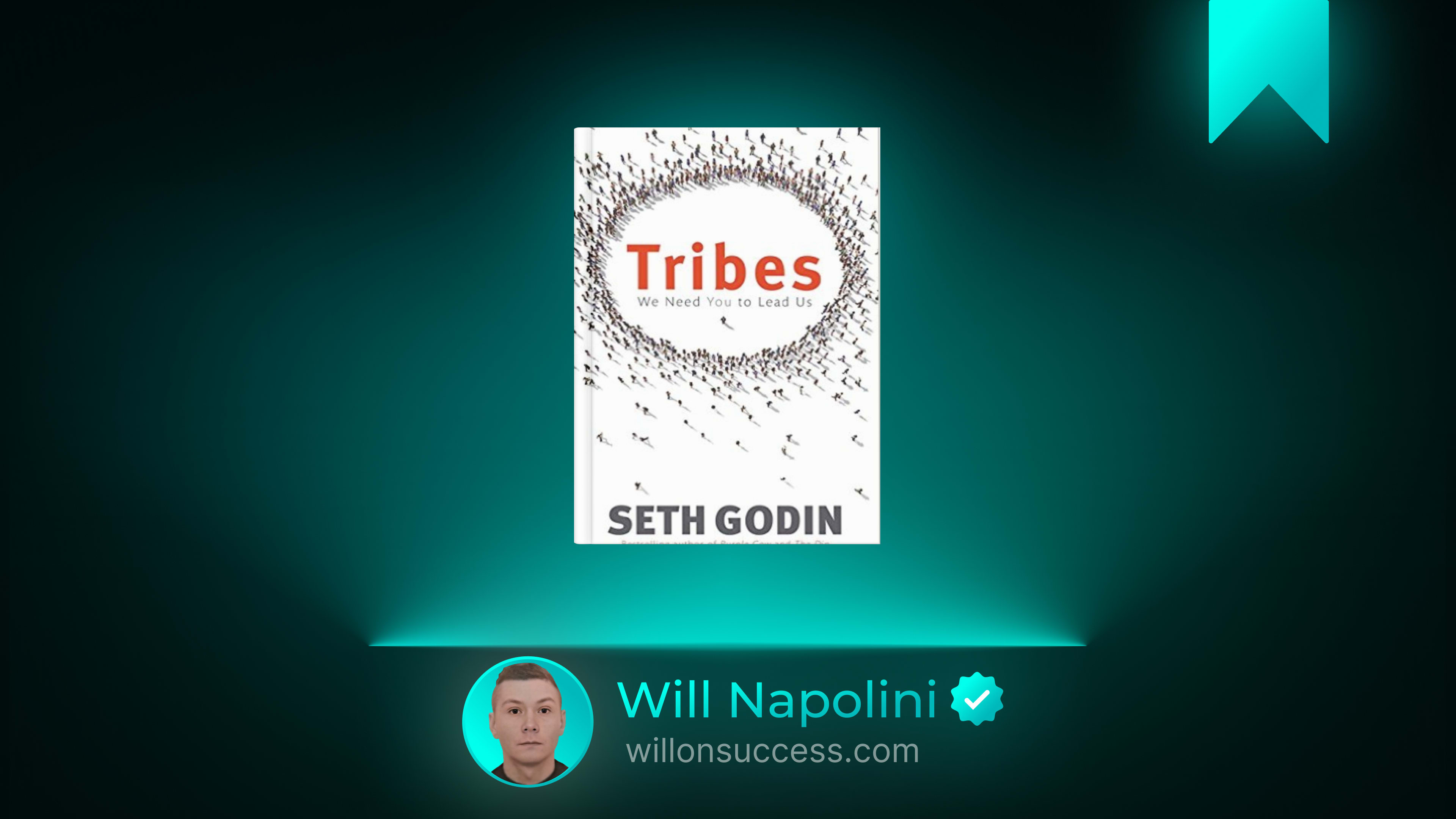
This is the central, liberating message of Seth Godin’s short but profoundly impactful book, Tribes: We Need You to Lead Us. It is not a manual on how to climb the corporate ladder. It is a manifesto on how to step off the ladder entirely and build something better on the ground, alongside others.

The Big Idea: Leadership is a Choice, Not a Title
For decades, we have been taught a narrow definition of leadership. We have been conditioned to believe that leadership is a synonym for management. We think it requires a corner office, a formal title, a large budget, and a team of direct reports who are obligated to listen to us.
Godin dismantles this illusion completely. He argues that leadership has nothing to do with authority, and everything to do with connection.
His definition is beautifully simple: A tribe is a group of people connected to one another, connected to a leader, and connected to an idea. For millions of years, human beings have been part of one tribe or another. A group needs only two things to be a tribe: a shared interest and a way to communicate.
The big idea here is that the internet has fundamentally changed the economics of organizing. It has removed the friction. You no longer need a printing press, a television network, or a corporate hierarchy to gather people. You just need a shared belief and the courage to start the conversation. Leadership is no longer a privilege granted by an institution; it is a choice available to anyone willing to make it.
The Story of the Campfire and the Cog
To understand why this matters, we have to look at how we got here.
For most of human history, tribes were essential for survival. We gathered around campfires. The leader was simply the person who knew the way, who could tell the best stories, or who cared enough to organize the hunt. Leadership was fluid, practical, and based on trust.
Then came the Industrial Revolution. To build massive factories and scale production, society needed compliance, not creativity. We needed cogs, not campfire storytellers. The education system and the corporate world were brilliantly designed to reward obedience. We were taught to keep our heads down, follow the instructions, and not rock the boat. The “status quo” became the ultimate goal.
But the industrial age is over. The economy no longer rewards mere compliance; machines and algorithms can do compliant work faster and cheaper than we can. The modern world rewards the “heretics”—the people who challenge the status quo, who connect disparate ideas, and who build new communities around meaningful work.
Godin points out that we are currently suffering from a leadership shortage. But it is not a shortage of capable people. It is a shortage of people willing to take the risk of leading without a guarantee of success. We have been so thoroughly trained to be good followers that we have forgotten how to be the person who strikes the match.
The Major Principles
Tribes is packed with actionable philosophy. Here are the core principles that can shift how you approach your work, your relationships, and your personal growth.
You Do Not Need Permission to Lead
This is the most critical takeaway. We often use the lack of a title as an excuse for inaction. I can’t start that initiative because I’m not the director. I can’t organize the neighborhood cleanup because I’m not on the HOA board.
Responsibility before excuses. The moment you decide to serve a group of people and challenge the status quo, you are a leader. The title is just a lagging indicator of the leadership you have already demonstrated. If you wait for the organization to anoint you, you will be waiting forever. True leadership is permissionless. It begins the moment you decide to care more than the person next to you.
Heretics Drive Progress
Godin uses the word “heretic” not as an insult, but as a badge of honor. A heretic is someone who looks at the accepted way of doing things and says, “There has to be a better way.”
Every major advancement in business, science, and culture was started by a heretic who was initially ridiculed or ignored. The status quo is comfortable, but it is also a slow death for innovation. Growth before achievement means you must be willing to look foolish in the short term to build something valuable in the long term. If you are not occasionally making the establishment uncomfortable, you are probably not leading; you are just managing.
Connection is the New Currency
In a world drowning in information, attention and trust are scarce. You cannot force people to follow you. You can only invite them.
A leader’s primary job is to connect people to each other, not just to themselves. Think of a great leader not as a megaphone, but as a hub in a network. When you create a space where people with a shared interest can find each other and feel understood, you create loyalty that no salary or threat can replicate. Principles before hacks: You cannot hack your way to a loyal community with clever marketing. You build it through consistent, genuine connection.
The Alternative to Leadership is Irrelevance
It is tempting to keep your head down. It feels safe. But Godin issues a gentle, firm warning: conformity is not a survival strategy anymore.
If you do not lead, someone else will. And the tribe that forms around a better idea, a more compassionate vision, or a more efficient process will eventually make your current way of doing things obsolete. You start small. You stay consistent. You let time do its work. But you must start.
Why It Matters to You Right Now
You might be thinking, I am not trying to start a revolution. I just want to do my job well and provide for my family.
That is entirely valid. But leading a tribe does not require a global platform. It scales to the size of your ambition.
A tribe can be the three other engineers on your team who are tired of bloated software and want to build something clean. It can be the parents in your neighborhood who want to create a safer walking route to school. It can be the readers of your small newsletter who share your passion for sustainable gardening.
When you apply the principles of Tribes to your daily life, you stop feeling like a victim of your circumstances. You realize that you have agency.
Think about the friction you experience at work. Instead of complaining about it in the breakroom (which is just shared commiseration, not leadership), what would happen if you drafted a one-page proposal for a solution and shared it with two colleagues? You have just started a tribe.
Think about your personal goals. Instead of trying to get fit in isolation, what if you invited three friends to commit to a weekly walk, creating a shared accountability system? You have just become a leader.
Understanding this shifts your posture from passive observer to active creator. It gives you your power back.
Practical Application: How to Build Your Tribe
Understanding the philosophy is only the beginning. Action before intention. Here is how you can translate Godin’s ideas into concrete behavior this week.
1. Define Your “Shared Interest” Clearly
A tribe cannot form around vagueness. “I want to help people” is not a shared interest; it is a platitude. Get specific. Take ten minutes to write down: Who exactly do I want to serve, and what specific problem do we share? For example: “I want to connect mid-level graphic designers who are struggling to transition into freelance work.” The more specific the shared interest, the stronger the gravitational pull of your tribe.
2. Make a Permissionless Move
Do not wait for a meeting agenda or a formal mandate. Identify one small, tangible improvement you can make right now that aligns with your shared interest. If you want to improve team communication, do not ask for a budget for a new software tool. Instead, start sending a concise, highly valuable “Friday Wrap-Up” email to your immediate team, highlighting wins and clarifying next steps. Do it for a month. Lead by example, not by decree.
3. Establish a “Drumbeat” of Communication
A tribe needs a way to communicate, and it needs rhythm. Consistency before intensity. You do not need to post every hour or host massive events. You just need a reliable drumbeat. Choose one channel (a weekly email, a monthly coffee chat, a shared document) and commit to showing up there consistently. The reliability of your communication builds trust faster than the brilliance of your ideas.
4. Challenge the Status Quo Respectfully
Identify one “sacred cow” in your environment—a rule, process, or belief that everyone accepts but no one questions. Next time it comes up, be the heretic. Ask the gentle but probing question: “Why do we do it this way? What would happen if we tried [alternative]?” You do not have to have the answer. You just have to be the one who asks the question.
Who Should Read This Book
Tribes is a quick read. You can finish it in an afternoon. But its ideas will echo for years.
You will benefit immensely from this book if:
- You feel stifled in a rigid, bureaucratic environment and are looking for a way to make an impact without waiting for permission.
- You are an entrepreneur, creator, or community builder trying to understand how to gather a loyal audience.
- You have a great idea but are paralyzed by imposter syndrome or the fear of not having the “right” credentials.
You may find it less useful if:
- You are looking for a detailed, step-by-step technical manual on organizational management or corporate politics.
- You are deeply committed to maintaining the status quo and view any disruption as a threat rather than an opportunity.
Godin’s book is a spark. It is up to you to provide the kindling.
One Small Step
Do not close this article and file it away under “inspiring things to think about later.” The world has enough thinkers. It needs doers.
Here is your one small step for today: Identify one person or a small group of people who share a specific interest or frustration with you.
Send them a brief, permissionless message. It should say something like: “I’ve been thinking about [specific problem/idea]. I know we both care about this. Would you be open to a 15-minute chat next week to brainstorm one small thing we could do to improve it?”
Do not ask for permission to lead. Just extend the invitation to connect.
The Final Lesson
We often imagine leadership as a spotlight, a grand stage, and a cheering crowd. But real leadership is much quieter, and much more profound.
Real leadership is the person who notices the room is cold and quietly gets up to adjust the thermostat. It is the person who sees a colleague struggling and offers a specific, practical resource. It is the person who refuses to accept “because we’ve always done it this way” as a valid answer.
You have spent years being trained to follow. You have been rewarded for compliance. But the world you live in today does not need more compliant followers. It is starving for people who are willing to care enough to connect, to challenge, and to build.
The campfire is waiting. The people are out there, looking for a signal.
You do not need a title. You do not need permission. You just need to be the first one to strike the match.