The Courage to Be Seen: What a Tragic Masterpiece Teaches Us About Authentic Living
I want to show you an idea that hides in plain sight, one that most of us spend our entire lives trying to outrun. It is the quiet, exhausting suspicion that if people truly saw us—the unfiltered, unpolished, unedited version of who we are—they would turn away.
We live in an era obsessed with optimization. We want the right morning routine, the perfect career trajectory, the flawless public image. We curate our lives to project competence, happiness, and control. But what happens when the gap between who we are pretending to be and who we actually feel we are becomes too wide to bridge?
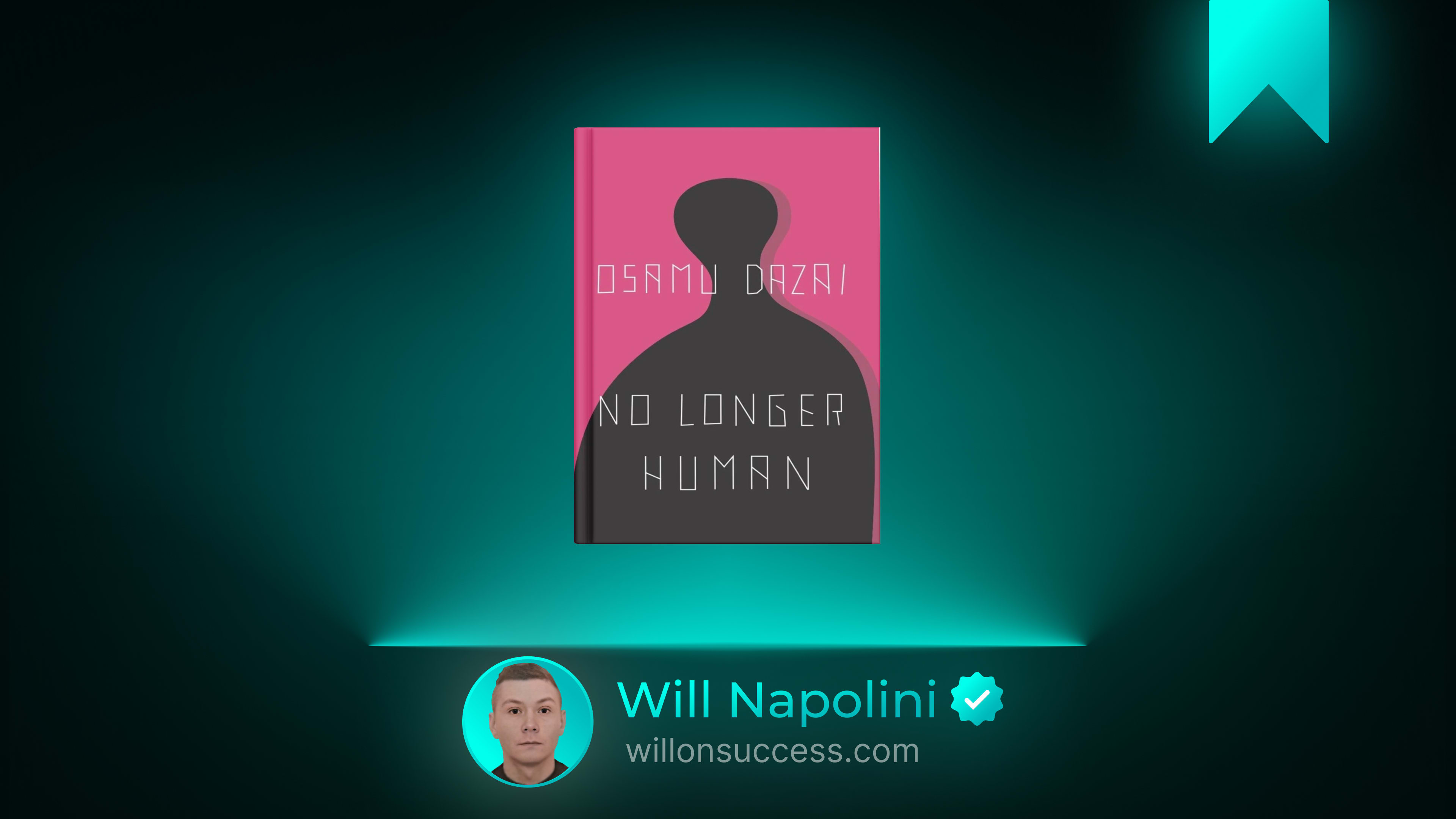
To answer that, I don’t want to point you toward a modern productivity guru or a cheerful manifesto on positive thinking. I want to take you back to 1948, to a dark, haunting, and deeply tragic novel by the Japanese author Osamu Dazai. The book is called No Longer Human.
I will be honest with you: this is not an uplifting book. It does not offer five steps to happiness. It is a story of profound alienation, depression, and self-destruction. But as a mentor who has sat across from countless people silently drowning in their own perceived inadequacies, I have found that some of the most vital lessons about how to live come from studying exactly how a life can be lost.
The Big Idea
The central thesis of No Longer Human is the devastating cost of inauthenticity. It is a masterclass in the psychology of the mask. The novel shows us what happens when a human being decides that their true self is too shameful to be seen, and so they dedicate their entire existence to a performance.
Dazai’s work is a mirror held up to our deepest social fears. It asks a piercing question: If you spend your whole life successfully hiding who you really are, who is actually living your life?
The Story of the Clown
The protagonist of the novel, Yozo Oba, is a man paralyzed by a profound fear of other people. From his earliest childhood, he feels entirely disconnected from the human race. He watches his family and neighbors and realizes he does not understand their motivations, their joys, or their unspoken rules for living. He feels fundamentally at odds with society, as if he were born on a different planet and left without a translator.
Terrified that others will discover his “otherness” and cast him out, Yozo develops a brilliant, tragic survival mechanism. He becomes a clown.
Through what he calls “buffoonery,” he acts the fool, plays the jester, and forces smiles to make those around him laugh. He learns to manipulate his outward appearance to project a harmless, entertaining persona, all while hiding a deep, internal void. He believes that if he can just keep people entertained, they will never look close enough to see the terrified, empty boy hiding behind the smile.
As he grows older, the mask becomes heavier. The clowning leads to deeper isolation, severe substance abuse, and a series of tragic, destructive relationships. Eventually, the gap between the smiling clown on the outside and the self-loathing man on the inside becomes unbearable. Yozo concludes that he is irreparably broken. He famously declares in his notebooks that his has been a life of immense shame, and that he is entirely disqualified from being a human being.
Yozo’s story ends in institutionalization and absolute ruin. But in his ruin, he leaves behind a map of the traps we must avoid if we want to build a life of genuine connection.
The Exhausting Architecture of the Mask
Yozo’s “buffoonery” is not just about telling jokes. It is a sophisticated defense mechanism. It is the art of managing other people’s perceptions so they never get close enough to see your flaws.
In your life, the mask might not look like clowning. It might look like perfectionism. It might look like chronic overachievement. It might look like the curated life you present on social media, or the “I’m totally fine, just busy!” text you send when you are actually falling apart. It might look like agreeing with everyone in a meeting because you are terrified of your own dissenting opinion.
When you wear a mask, you achieve a specific kind of safety. People like the mask. They reward the mask. They promote the mask. But this creates a devastating psychological trap: even if you are loved, admired, or successful, you cannot internalize it. Because you know, deep down, that they do not love you. They love the performance.
You start small. You hide a minor insecurity. You stay consistent. You hide your struggles, your doubts, and your fatigue. You let time do its work. Eventually, you forget where the mask ends and your face begins.
And so, the more successful the mask becomes, the lonelier you feel. You can be in a room full of people who adore you, and still feel entirely, profoundly alone, because the real you is not in the room. The real you is hiding backstage, exhausted from the performance.
Shame Thrives in the Dark
Yozo begins his story with a confession that chills the bone: “Mine has been a life of shame.”
Shame is the belief that you are fundamentally flawed, that there is something inside you that makes you unworthy of connection. Yozo believes his internal darkness makes him a monster, completely disqualified from the human experience. He assumes that everyone else possesses a natural goodness that he was somehow denied.
Here is what I have learned about shame: it is a liar, but it is a highly convincing one. Shame convinces you that your struggles are unique to you. It tells you that if you just work harder to hide it, you will be safe. But shame cannot survive being spoken. It only grows in isolation.
Think of shame like a weed that thrives only in dark, damp soil. The moment you pull it up and expose its roots to the sunlight, it begins to wither. The moment you bring your hidden shame into the light of a trusted relationship, it loses its power. Yozo’s tragedy was not that he was broken; his tragedy was that he believed he had to carry his brokenness entirely alone. He never learned that sharing our perceived flaws is not a burden to others; it is the bridge that connects us to them.
The Illusion of the “Normal” Human
One of Yozo’s greatest torments is his inability to understand how other people function. He watches them work, eat, and socialize, and he assumes they possess some secret manual for life that he was never given. He assumes they are confident, grounded, and whole, while he is merely an imposter faking his way through the day.
When Yozo watches the people around him, he is essentially watching actors on a stage, assuming they are living real life while he is merely pretending. He projects his own internal chaos onto them, assuming they have found a peace he cannot access.
Consider how often you do this in your own life. You walk into a boardroom and see a leader who speaks with absolute certainty. You assume they are fearless. You do not see the hour they spent in their car in the parking lot, gripping the steering wheel, trying to calm their racing heart before walking through the doors. You see a couple holding hands on the street and assume they have solved the mystery of love. You do not see the difficult, tearful conversation they had the night before, or the conscious, daily choice they are making to forgive each other.
We judge our insides by other people’s outsides. This is a fundamental error in human perception. When you catch yourself feeling like an imposter, remind yourself that imposter syndrome is rarely a sign of incompetence; it is usually a sign of awareness. The people who truly lack the capacity for the job are rarely the ones worrying about whether they are qualified. The very fact that you care enough to question your own adequacy is evidence of your humanity, not your disqualification from it.
The Toll of Numbing the Pain
As the pressure of maintaining his facade becomes too much, Yozo turns to alcohol, drugs, and reckless behavior to numb his awareness. He tries to anesthetize the terror of his own mind. He cannot face the world sober, because being sober means feeling the full weight of his own shame.
But avoidance always extracts a toll. You cannot selectively numb emotion. When you numb the pain of shame and fear, you also numb your capacity for joy, love, and genuine connection. The things we refuse to face do not disappear; they simply wait in the shadows, gathering strength.
Yozo’s descent into addiction is his attempt to bridge the gap between his internal reality and the external world. He drinks to quiet the voices of his own shame. He uses substances to artificially manufacture the warmth and connection that his masks have prevented him from finding naturally.
But as many of us have discovered in our own lives, a shortcut to peace is usually a detour to misery. What we resist persists. When you numb your anxiety with endless scrolling, the anxiety does not leave; it merely waits for the screen to go dark. When you numb your grief with overworking, the grief does not heal; it merely hardens into a chronic tension in your shoulders and a shortness of temper with the people you love.
Courage is not the absence of pain. Courage is the willingness to feel the pain without immediately reaching for an anesthetic. It is the willingness to sit on the couch on a quiet Tuesday evening, with no distractions, and simply say to yourself, “I am hurting right now, and that is okay.” When you stop running from your own internal weather, you eventually realize that the storm will pass. You are the sky, not the weather.
Why This Matters on an Ordinary Tuesday
How does a tragic post-war Japanese novel apply to your life today?
If you are working hard but still feel a lingering sense of emptiness, you might be maintaining a mask that has outlived its usefulness. You are winning the game, but you are not enjoying the prize, because the person winning isn’t really you.
If you are in leadership, you might be projecting an image of invulnerability that prevents your team from trusting you. People do not follow perfect leaders; they follow brave ones.
If you are in a relationship, you might be playing the “pleaser,” terrified that a moment of honest disagreement or a display of genuine need will cause your partner to leave you. But a relationship built on a performance is a fragile thing. It shatters the moment the actor forgets their lines.
The book asks us to look at the spaces where we are performing rather than participating. It asks us to trade the safety of being admired for the profound, messy, beautiful risk of being known.
Practical Application: Dropping the Armor
Understanding the danger of the mask is valuable, but understanding without action changes nothing. Here is how you begin to dismantle the architecture of your own performance.
1. Audit Your Performances
Take ten minutes this week to identify one area of your life where you are “clowning” or performing to manage others’ perceptions. Is it at the dinner table with your family? In team meetings at work? On your social media feed? Name the specific audience you are trying to please, and name the specific fear that drives the performance.
2. The Ten Percent Vulnerability Rule
You do not need to tear off the mask entirely all at once. That is terrifying, and often unwise. Instead, aim for ten percent more authenticity. Share a small, genuine struggle with a trusted friend. Say “I don’t know the answer to that, but I will find out” in a meeting instead of faking it. Admit you are tired when someone asks how you are. Small acts of truth build the muscle for larger acts of courage.
3. Name the Shame
Write down the specific fear that drives your mask. “I am afraid that if they know I am struggling, they will think I am incompetent.” “I am afraid that if I show my sadness, I will be a burden.” Seeing it on paper robs it of its infinite, shadowy power. It becomes a sentence, not a monster.
Who Should Read This Book
Who is this for? No Longer Human is profoundly moving for anyone who has ever battled imposter syndrome, who feels exhausted by people-pleasing, or who carries a quiet belief that they are somehow fundamentally different or broken compared to everyone else. It offers a strange, dark comfort in feeling understood in your deepest alienation. It is a mirror for the shadow self.
However, I must be honest with you: this book is not for everyone. It is incredibly dark, dealing heavily with severe depression, addiction, and suicide. If you are currently in a fragile mental space, or if you are looking for light, uplifting, or purely optimistic reading, this book will be too heavy. It requires emotional resilience to read, as it does not offer a redemptive happy ending for its protagonist. Its value lies in its warning, not in its comfort. It is a map of the abyss, meant to show you where not to walk.
One Small Step
Today, I want you to drop one small mask. Think of one conversation you are going to have today where you would normally give a rehearsed, socially acceptable answer. When someone asks how your project is going, or how your weekend was, resist the urge to give the polished, entertaining response. Give them the honest, unedited truth, even if it is just a sentence long. Let someone see the real you for just one minute.
The Final Word
Osamu Dazai’s No Longer Human is a mirror held up to our deepest fears. It shows us the tragic end of a man who believed his shadows made him a monster. But you are not Yozo. You have the benefit of his warning. You have the opportunity to look at the masks you wear and realize that they are not protecting you; they are imprisoning you.
The opposite of being “disqualified” from humanity is not being perfect. It is being real. The world does not need another flawless performance. It needs your actual, breathing, struggling, hoping self.
Step out from behind the curtain. Take a breath. Let them see you.
You do not have to be flawless to be worthy of belonging; you only have to be brave enough to be seen.