The Art of Seduction by Robert Greene: The Hidden Psychology of Human Connection
Most of us walk through our daily lives feeling entirely invisible.
You go to work, you fulfill your obligations, you interact with colleagues and friends, and you return home. You are polite, you are competent, and you are entirely forgettable. You may be working hard, building a good life, and still wondering why you do not command the room when you walk into it, or why your relationships feel more like logistical partnerships than passionate connections.
We tend to believe that influence, charisma, and deep attraction are the results of genetics. We think some people are simply born with a magnetic pull, while the rest of us are left to watch from the sidelines.
If I could sit across the table from you right now, I would tell you that this is a comforting lie.
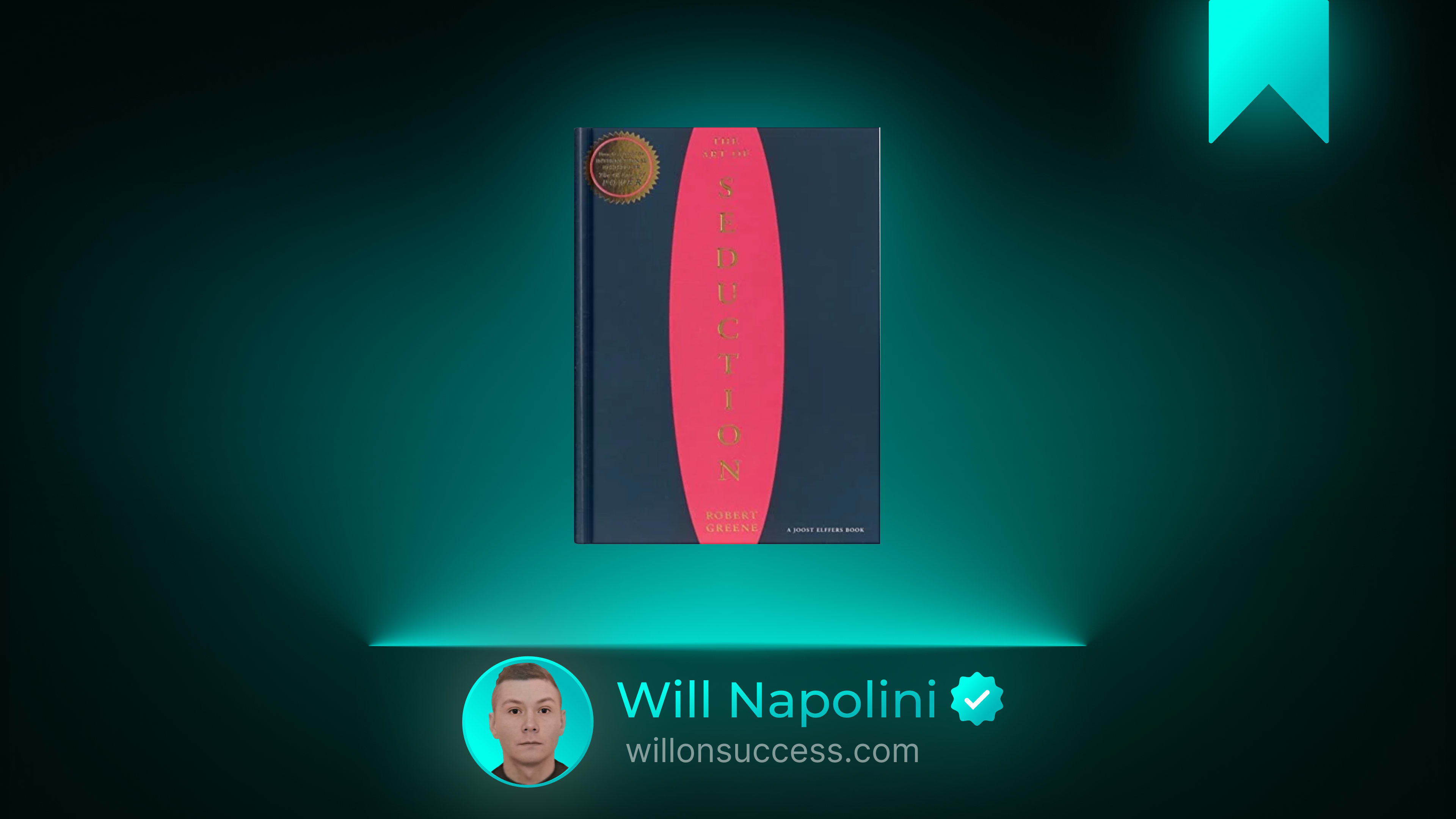
In The Art of Seduction, Robert Greene strips away the comforting illusions we tell ourselves about human interaction. He examines history’s most captivating figures—from Cleopatra to Casanova, from John F. Kennedy to Duke Ellington—and reveals a startling reality. Seduction is not about physical beauty. It is not about wealth. And it is certainly not about luck.
Seduction is a game of psychology. It is the deliberate, strategic art of understanding what people lack, and then becoming the person who fulfills that void.
Now, I know the title of this book carries a certain reputation. It is often viewed as a manual for manipulation, a dark guide to playing games with people’s emotions. And it is true that Greene writes unapologetically about power and strategy. But if you look past the historical intrigue and the Machiavellian edge, you will find a profound, almost beautiful truth about human nature.
At its core, this book is not really about romance. It is about attention. It is about the deep, starving human need to be seen, to be understood, and to feel alive. When you understand the mechanics of seduction, you do not just learn how to attract a partner. You learn how to lead, how to persuade, and how to connect with people on a level that bypasses their logical defenses and speaks directly to their emotional core.
The Currency of Influence is Attention, Not Appearance
To understand how influence actually works, we have to look at the fundamental mistake most of us make when trying to impress others.
When we want to be liked, or when we want to attract someone, our instinct is to talk about ourselves. We list our achievements. We show off our knowledge. We try to prove our value. We think that if we can just show people how great we are, they will be drawn to us.
Greene dismantles this approach entirely. He points out that people are overwhelmingly self-interested. They are trapped inside their own heads, worrying about their own insecurities, their own desires, and their own daily struggles. They do not care about your achievements. They care about how you make them feel about themselves.
The central thesis of the book is that the ultimate currency of seduction is not your own brilliance, but your ability to make the other person feel brilliant.
The most magnetic people in history were not the ones who talked the most; they were the ones who listened the most intensely. They were the ones who made the person sitting across from them feel as though they were the only individual in the world who mattered in that exact moment.
Think of a river carving through a landscape. The water does not draw attention to itself; it simply flows perfectly into the contours of the earth, taking the shape of the ground it touches. True influence works the same way. You do not force your personality onto someone else. You adapt to their psychological contours. You listen for their insecurities, their unfulfilled fantasies, and their hidden desires, and you reflect those back to them.
When you make someone feel profoundly seen, you bypass their skepticism. You disarm their defenses. You become irresistible not because of who you are, but because of who they become when they are around you.
The Danger of the Anti-Seducer
Before you can learn how to attract, you must first understand what is repelling people. This is perhaps the most practically useful section of Greene’s work, because it holds a mirror up to our own daily behaviors.
Greene identifies a category of people he calls “Anti-Seducers.” These are individuals who are entirely unaware of the emotional atmosphere around them. They repel others not because they are bad people, but because they are trapped in their own egos and insecurities.
What does an Anti-Seducer look like in real life?
They are the people who constantly need reassurance. They are the ones who complain endlessly about their problems, draining the energy from the room. They are the people who are too rigid, too literal, or too desperate to please. They lack a sense of play. They take things too seriously, or they take themselves far too seriously.
Neediness is like a leak in a boat. No matter how much water you pour in, no matter how much effort you exert, the vessel is always sinking. When you approach people with a hidden agenda—when you need them to validate you, to fix you, or to make you look good—they sense it immediately. It creates a subtle, instinctive pressure that makes them want to pull away.
I have learned that the first step in becoming more magnetic is not learning new tricks. It is ruthlessly eliminating your anti-seducer traits. It is doing the hard, internal work of securing your own self-worth so that you do not approach others with a cup held out, begging to be filled.
When you stop needing things from people, you create a vacuum. And human psychology dictates that nature abhors a vacuum. People will naturally lean in to fill that space.
People Crave the Escape from Their Own Reality
If you want to understand why people fall under the spell of certain leaders, artists, or partners, you have to understand the burden of modern existence.
Daily life is mundane. It is predictable. It is filled with routines, responsibilities, and compromises. People are exhausted by the sheer effort of maintaining their adult lives. They are starving for a sense of mystery, for play, for a break from the relentless logic of the everyday world.
Greene explains that the most effective seducers offer an escape. They do not offer reality; they offer a fantasy. They introduce an element of the unexpected. They are playful, slightly unpredictable, and deeply attuned to the aesthetic and emotional experience of the moment.
This does not mean you need to become a circus performer or a manipulative game-player. It means you must cultivate a sense of mystery and depth.
In a world where everyone over-shares on social media, where every thought is instantly broadcasted, and where every detail of our lives is laid bare, mystery is a radically attractive trait. Mystery is not about hiding who you are or playing deceptive games. It is about refusing to hand over the entire map of your soul on the first day. It is about having a rich, inner life that you do not immediately explain.
When you hold a little bit of yourself back, you give the other person’s imagination something to do. You invite them to lean in and discover more. You transform a flat, predictable interaction into a landscape they want to explore.
The Power of Strategic Patience and Space
We live in an era of instant gratification. We want the relationship to progress immediately. We want the deal to close today. We want the text message answered right now.
But Greene’s historical analysis reveals a universal law of human psychology: tension requires time.
If you give someone everything they want immediately, the value of what you are giving drops to zero. Scarcity creates value. Absence creates desire.
The most captivating people understand the power of strategic patience. They do not rush. They do not smother. They create a dynamic rhythm of presence and absence. They engage deeply, and then they step back, allowing the other person to feel the space they left behind.
Think of the seasons. If it were summer all year round, the warmth would lose its meaning. It is the arrival of autumn, the chill in the air, and the falling leaves that make the return of spring feel like a triumph. Human connection requires the same rhythm.
When you pull back slightly, when you do not immediately respond to every bid for attention, you give the other person the opportunity to miss you. You give them the space to realize that they want you in their life. You shift the dynamic from a passive receipt of your attention to an active pursuit of your presence.
This is not about playing hard to get. It is about having a life of your own. It is about being so grounded in your own purpose and character that you do not abandon yourself just to keep someone else comfortable. That grounded independence is deeply, quietly magnetic.
Why This Matters in Your Everyday Life
You might be reading this and thinking that these dynamics only apply to romance or high-stakes social maneuvering. But the psychology of seduction is the psychology of all human influence.
In Your Career and Leadership: The best leaders are not the ones who bark orders. They are the ones who understand the deep aspirations of their team. They make their employees feel seen, valued, and part of a compelling narrative. They use the principles of attention and vision to seduce their team into giving their best work, not out of fear, but out of genuine inspiration.
In Sales and Persuasion: Amateur salespeople talk about the features of their product. Master persuaders listen for the client’s underlying anxieties and desires. They tailor their message to fulfill a psychological need. They do not sell a product; they sell a better version of the client’s own life.
In Your Friendships and Family: How often do we take our loved ones for granted? How often do we sit at the dinner table looking at our phones instead of offering them the gift of our total, undivided attention? Applying these principles means choosing to make your spouse, your children, or your friends feel like the most fascinating people in the room. It means actively choosing to bring a sense of play and presence to your relationships, rather than letting them decay into mere routine.
How to Actually Apply This Tomorrow
Understanding human nature is only the beginning. Action before intention. Here is how you can translate these psychological insights into observable behavior starting today.
1. Conduct an Anti-Seducer Audit Be brutally honest with yourself. In your last three interactions, were you fully present, or were you waiting for your turn to speak? Were you complaining? Were you seeking validation? Identify your most prominent repelling habit—perhaps it is interrupting, perhaps it is needing to be right, perhaps it is chronic complaining. Choose one trait to actively suppress this week.
2. Practice “Deep Attention” In your next conversation, make a conscious decision to be the listener, not the talker. Ask the other person a question about their passions or their recent experiences. When they answer, do not just nod. Look them in the eye. Listen to understand, not to reply. Let them feel the weight of your complete, unbroken focus. Watch how their posture changes. Watch how they open up.
3. Introduce a Element of Mystery Stop over-explaining yourself. The next time someone asks you what you did over the weekend, or what you are working on, give a brief, intriguing answer and leave it at that. Do not feel the urge to fill the silence with excessive detail. Let your life have a little bit of shadow. Allow people to be curious about you.
4. Create Strategic Space If you are in a new relationship, or building a new professional connection, resist the urge to be constantly available. Finish your work. Pursue your own hobbies. Let there be gaps in your communication. Allow the other person the dignity of missing you and the opportunity to reach out first.
Who Should Read This Book
The Art of Seduction is a dense, fascinating, and unapologetically cynical exploration of human nature. It is filled with rich historical anecdotes, psychological analysis, and strategic frameworks.
If you are interested in the deeper mechanics of power, social dynamics, and human desire, this book is a masterpiece. It will permanently alter the way you read a room, understand a negotiation, or analyze a relationship. It is highly recommended for leaders, marketers, writers, and anyone who wants to see the invisible strings that pull human behavior.
However, I must offer a word of caution. Robert Greene writes from a perspective of pure strategy, often divorcing his tactics from moral considerations. If you are highly sensitive, or if you are looking for a guide to building healthy, vulnerable, and emotionally intimate modern relationships, this book may feel cold or manipulative. It is a book about power, not about love. Read it to understand the shadows of human nature, but do not let it convince you that all human connection is a battlefield.
One Small Step
The most powerful thing you can do today requires no strategy, no manipulation, and no historical precedent.
In your very next interaction with another human being, decide that your only goal is to make them feel interesting. Ask them a question about something they care about. Listen to their answer as if their words are the most important things you will hear all day.
You do not need to be the most fascinating person in the world to be deeply magnetic. You just need to be the person who makes others feel fascinating.
True influence is not about forcing people to look at you. It is about giving them a mirror, and showing them a version of themselves they have always wanted to see. Step into the room, quiet your own ego, and let the light fall on them.