The Architecture of Human Excellence: Decoding Unlimited Power
Have you ever watched someone achieve something you desperately want, using the exact same resources, time, and opportunities you have, and wondered what they possessed that you lacked?
It is a quiet, persistent question that haunts many of us. We assume they have more talent, more luck, or some hidden advantage. We look at their bank account, their network, or their natural charisma, and we tell ourselves a story about why they are where they are, and why we are where we are.
But what if the difference isn’t in their external circumstances at all? What if the difference is entirely in how they use the machinery of their own mind and body?
I have spent years studying people who seem to bend reality to their will. What I discovered was not magic. It was mechanics.
The Core Blueprint of Human Achievement
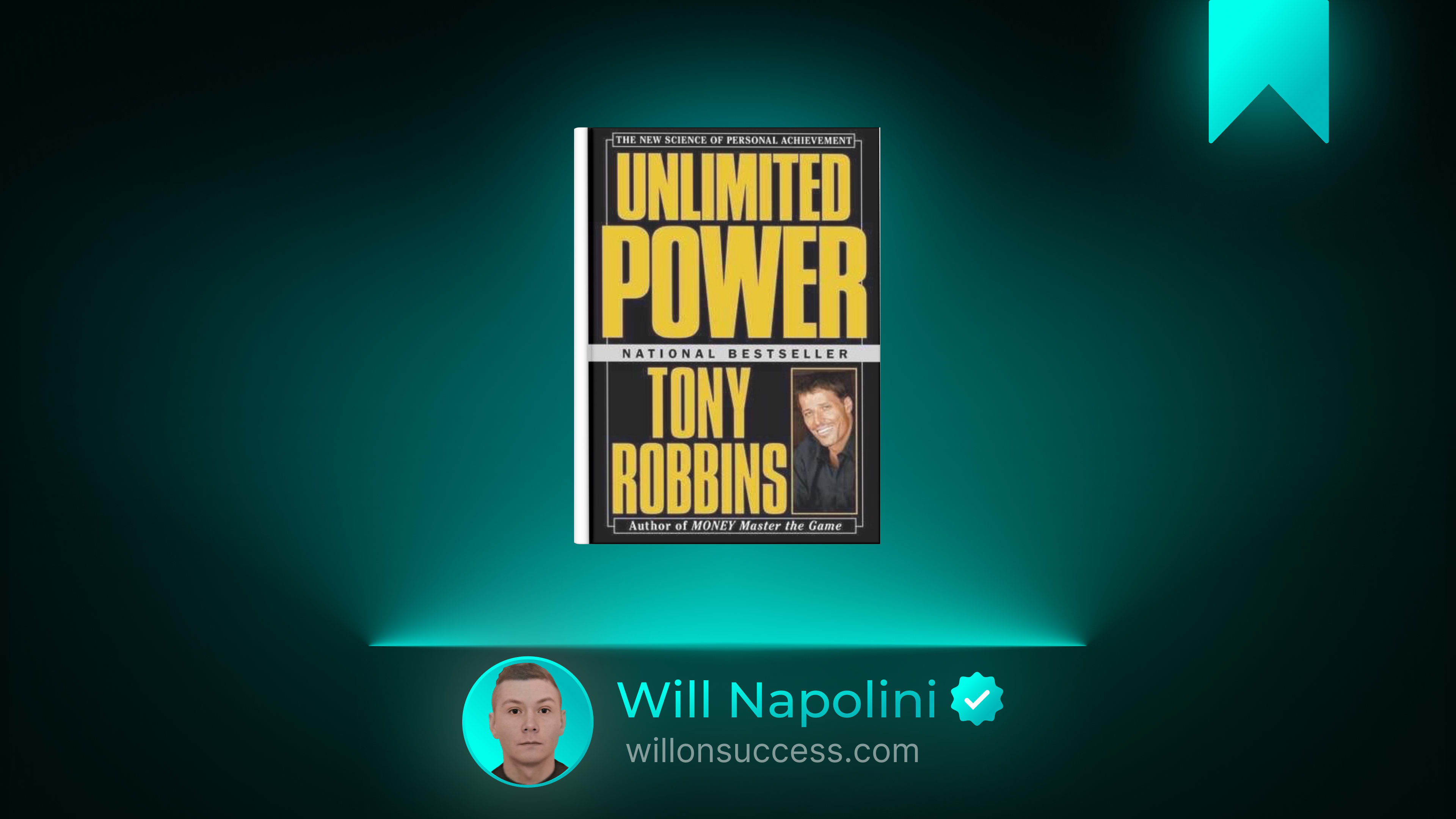
The central promise of Tony Robbins’s foundational work, Unlimited Power, is not that you need to become a different person. It is that you already possess the neurological hardware to achieve almost anything, provided you know how to operate it.
The core idea rests on a simple but profound premise: success leaves clues. Human excellence is not an accident. It is a process that can be decoded, mapped, and replicated. If someone can produce a specific result—whether that is closing a major sale, remaining calm in a crisis, or building a thriving relationship—they are running a specific sequence of thoughts, beliefs, and physical actions.
If you can identify that sequence and copy it, you can produce the exact same result. This goes far beyond blind imitation. It requires understanding the internal software of human excellence and learning to rewrite your own code.
The Engine of Human Performance
Before we can change our lives, we have to understand what actually drives our behavior. Imagine your mind and body as a high-performance vehicle.
Most people try to change their destination by staring at the map. They analyze their past, they worry about the future, or they try to think their way into a better mood. They sit in a chair, slumped over, breathing shallowly, and repeat positive affirmations, wondering why they still feel anxious and stuck.
You cannot drive to a new destination with a broken engine.
The engine of human performance is what Robbins calls your State. Your state is the sum of two things: your physiology (how you hold your body, how you breathe, how you move) and your internal representations (the pictures you make in your mind, the words you say to yourself, and the tone of your internal voice).
When you are in a “low-power” state, your brain literally restricts your options. You see problems instead of solutions. You react instead of responding. But when you shift your physiology—when you stand up straight, pull your shoulders back, and breathe deeply—you change the biochemistry of your brain. You shift your state. And when your state changes, your capabilities instantly expand.
I have seen this happen in boardrooms and in living rooms. The moment a person changes their physical posture, the tone of their voice changes. The words they choose change. The decisions they make change. Motivation is fleeting. What you actually require is a reliable system that places you in the optimal state to act.
Success Leaves a Traceable Blueprint
If you want to bake a perfect loaf of bread, you do not guess the temperature of the oven or the ratio of flour to water. You find a master baker and you copy their exact recipe.
Yet, when it comes to human achievement, we often try to invent the recipe from scratch. We rely on trial and error, hoping that one day we will stumble upon the right combination of habits and thoughts.
Robbins introduces a framework called the Ultimate Success Formula, which is the bedrock of modeling excellence. It consists of four distinct steps:
- Know your outcome. You must have absolute clarity about what you want. Most people know what they don’t want. They don’t want to be broke, they don’t want to be lonely, they don’t want to be stressed. But the brain cannot steer toward a negative. It needs a target.
- Take action. Insight without execution is just entertainment. You must do something, anything, that moves you in the direction of your outcome.
- Develop sensory acuity. This is where most people fail. They take massive action, but they never stop to look at the feedback. They are so busy pushing against a locked door that they don’t notice the window is open. Sensory acuity means stepping back, observing the actual results you are getting, and being honest about whether they are moving you closer to your goal.
- Change your approach until you get what you want. If what you are doing isn’t working, do not just do it harder. Do it differently. Flexibility is the ultimate competitive advantage.
When you combine these four steps, you stop being a victim of circumstance and become a student of results. You begin to look at successful people not with envy, but with curiosity. You start asking: What are they doing that I am not? What do they believe that I doubt?
You Are the Author of Your Own Meaning
If I could sit across the table from you right now, I would ask you about the biggest setback you are currently facing. A lost client. A fractured relationship. A health diagnosis. A financial failure.
We tend to believe that these events carry inherent meaning. We believe that losing a job is inherently “bad,” or that being rejected is inherently “painful.” But consider this fundamental reality: nothing in this world has inherent meaning until we decide what it means.
Meaning is not something you find in an event; it is something you forge in your mind.
Robbins teaches a technique called reframing, which is the art of changing the meaning of an experience by changing its context or its content.
Imagine you are passed over for a promotion. A content reframe changes what you focus on within the event itself. Instead of focusing on the humiliation, you focus on the feedback. You ask, “What specific skill am I missing that I can now dedicate the next six months to mastering?” A context reframe changes the timeline or the environment in which you view the event. You ask, “How will this apparent failure serve me in five years? What door is this forcing me to walk through that I would have been too comfortable to open myself?”
When you master reframing, you become untouchable. You stop being a leaf blown around by the winds of circumstance, and you become the wind itself. You realize that every setback is simply raw material. It is up to you to decide whether you will use that material to build a wall that keeps you trapped, or a bridge that carries you forward.
Choose the Beliefs That Serve Your Growth
Perhaps the most challenging and brilliant concept in Unlimited Power is the idea of the “Seven Lies of Success.”
Robbins calls them “lies” because he understands a deep epistemological truth: we can never know the absolute, objective truth of the universe. Every belief we hold is essentially a filter—a story we tell ourselves to navigate reality. Therefore, the question is never, “Is this belief 100% objectively true?” The only question that matters is, “Is this belief useful? Does it empower me to take action, or does it paralyze me?”
If a belief limits you, it is a useless lie. If a belief expands you, it is an empowering one. Among these seven, two stand out as foundational pillars for anyone seeking to build a life of consequence.
1. There is no such thing as failure; there are only outcomes. Most people are terrified of failure because they attach their self-worth to the result. If the business fails, they believe they are a failure. But if you adopt the belief that every action simply produces an outcome, you remove the emotional sting of defeat. You become a scientist in the laboratory of your own life. When an experiment yields an undesirable outcome, you don’t cry; you adjust the variables and run the experiment again.
2. Whatever happens, take responsibility. It is exhausting to believe that everything is your fault. It is heavy, and it is uncomfortable. But it is also incredibly liberating. When you blame the economy, your boss, your upbringing, or your genetics, you are handing them the remote control to your life. You are saying, “I cannot change until they change.” Responsibility is not a heavy burden you carry; it is the steering wheel you grip. It simply means “response-ability”—the ability to choose your response to any stimulus. When you take absolute responsibility for where you are, you simultaneously claim absolute power to change where you are going.
Why This Matters on an Ordinary Tuesday
Why should you care about state management and reframing? Because most of our daily suffering does not come from the actual events of our lives, but from the state we are in when those events occur.
Think about your work. When you procrastinate on a major project, it is rarely because you are lazy. It is because your internal representation of the work is linked to pain, and your physiology is primed for retreat. You are trying to force a tired, slumped body to do the work of an energized, focused mind.
Think about your relationships. When you snap at your partner over something trivial, like a cup left on the counter, it is almost never about the cup. It is because you walked into the kitchen already in a depleted, reactive state. The cup was just the spark; the state was the gasoline.
By mastering your internal machinery, you stop leaking energy. You stop being a victim of your environment. You begin to show up as the person you actually want to be, not just when it is easy, but especially when it is hard.
What you repeat in private eventually becomes visible in your life. The private victories of managing your state and choosing your meaning are what eventually build the public monuments of your success.
Turning Concepts into Behavior
Understanding these principles is valuable, but understanding without action changes nothing. Let’s move this from theory to your daily routine. Here are three specific ways to build unlimited power into your life starting today.
The Morning State Audit Before you check your email or scroll through social media, take inventory of your physiology. Are your shoulders rounded? Is your breathing shallow? Are you staring down at a screen? Force a shift. Stand up. Pull your shoulders back and down. Take three deep breaths that expand your belly, not just your chest. Hold a posture of quiet confidence for sixty seconds. Notice how the anxiety of the day’s to-do list begins to dissolve when you change the physical vessel that carries it.
The Reframing Journal At the end of the day, identify one frustration or setback you experienced. Write it down. Then, force yourself to write down three ways this event could actually serve you in the long run. Did a client cancel? Good, I now have three hours to refine my onboarding process. Did you get stuck in traffic? Good, I have uninterrupted time to listen to an audiobook I’ve been putting off. Train your brain to hunt for the hidden advantage in every obstacle.
The Modeling Interview Identify one person in your life or industry who consistently produces a result you desire. It could be their ability to speak in public, their financial discipline, or their calm demeanor under pressure. Take them to coffee. Do not ask them for their secrets; ask them for their strategies. Ask: “When you are about to do [X], what is the very first picture you make in your mind? What do you say to yourself? What do you focus on?” You will be amazed at how specific and replicable their internal processes are.
Who Should Read This Book
Unlimited Power is a foundational text for anyone who feels they are operating below their potential. It is particularly valuable for entrepreneurs, leaders, salespeople, and individuals in high-stakes environments who need to manage their energy, focus, and emotional state on demand.
It is a highly tactical, energetic, and unapologetically demanding book. It is less suited for those looking for gentle, slow-paced introspection, or those who prefer to view their challenges purely through the lens of systemic or external victimization.
This book will not coddle you. It will not tell you that your limitations are the fault of a cruel world. Instead, it will hand you the tools to dismantle those limitations yourself. It is worth reading if you are finally ready to stop negotiating with your potential and start demanding it.
One Small Step
We often believe that massive change requires massive action. We wait for the perfect moment, the perfect mood, or the perfect alignment of the stars before we begin.
But change does not start with a grand gesture. It starts with a micro-shift in your physiology.
Tomorrow morning, the moment you wake up, before you reach for your phone, sit up on the edge of the bed. Pull your shoulders back, take three deep breaths into your belly, and force a wide smile for sixty seconds. Do not wait until you feel good to smile; smile to signal to your nervous system that you are safe, capable, and ready.
Notice how the rest of your morning shifts.
Your life does not change when your circumstances shift. It changes the moment you decide to take the wheel.